Anal Area Complaints – Treatment in Basel
Most women do not come to me because of the fissure. They come because they have been afraid of every bowel movement for months, because anal intercourse has become impossible, or because they no longer feel clean. Almost no one talks about this – and many stayed silent for years. In most cases I can help on an outpatient basis: discreetly, under local anesthesia, often in a single appointment.
- Who it is for
- Fear of every bowel movement, fissures that will not heal, skin tags, pain during anal intercourse
- Appointment
- Assessment first, then targeted outpatient treatment – often in a single appointment
- Costs
- Assessment via basic insurance; treatments from CHF 450–950 depending on method, self-pay
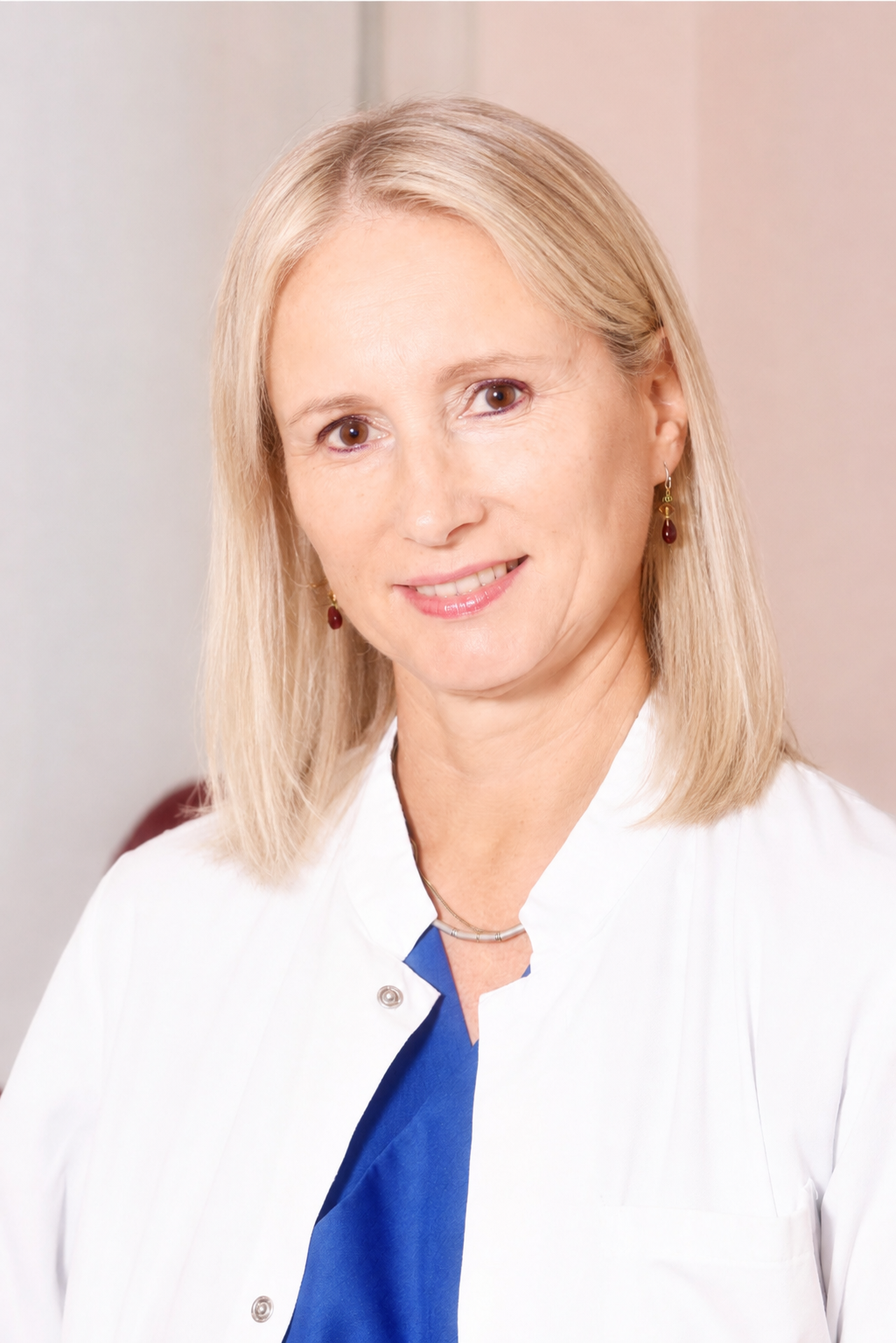
Confidential, personal advice on anal complaints.
A defined treatment offering for the anal area: treatment for a tight sphincter, autologous platelet-rich plasma (PRP) for non-healing fissures, removal of skin tags with radiofrequency or laser – outpatient, under local anesthesia. No colonoscopy, no hemorrhoid or fistula surgery, no sphincterotomy. Private-pay.
- Clear limits – No colonoscopy, no hemorrhoid or fistula surgery, no sphincterotomy. Where indicated, we refer you specifically.
- Histology – I send every skin tag for histology – without exception. I have seen too often that a seemingly harmless tag turns out to be a wart or a cell change.
- The right measure – Removing too much skin can cause scar narrowing. We correct deliberately conservatively – rather in two steps than too generously.
At a glance
We treat complaints in the anal area discreetly, on an outpatient basis and under local anesthesia. This is not about bowel disease, but about your wellbeing in everyday life and in your sexuality. We treat pain, a tight sphincter, non-healing fissures, anal skin tags and bothersome skin folds, and scars after childbirth.
- Gynecologist FMH with a focus on operative gynecology and obstetrics
- Specialized training with Prof. Red M. Alinsod (USA) – AVVS diploma
- Outpatient, under local anesthesia – home the same day
- Every removed tissue sample is examined histologically
- Clear limits: no proctology clinic, targeted referral where needed
- Honest appraisal of the evidence – including where it is limited
Experience in numbers
Outpatient
Local anesthesia
Discreet
Secure correspondence
Histology
Every removed tissue
One doctor
Consultation, procedure, follow-up
Why Dr. Wagner
We treat what is actually there.
Not every cause needs a procedure. Often treating the underlying condition, a different lubricant or targeted pelvic floor therapy is enough.
Clear limits
No colonoscopy, no hemorrhoid or fistula surgery, no sphincterotomy. Where indicated, we refer you specifically.
Histology
I send every skin tag for histology – without exception. I have seen too often that a seemingly harmless tag turns out to be a wart or a cell change.
The right measure
Removing too much skin can cause scar narrowing. We correct deliberately conservatively – rather in two steps than too generously.
Concern
Who this consultation is for.
In my practice I frequently see women who have already tried several ointments – and whose fissure still will not heal. As long as the sphincter stays in spasm, it cannot heal. I treat pain on defecation, persistent pain in the anal area, a tight sphincter, pain during anal intercourse, skin tags and bothersome skin folds, and perineal and perianal scars after childbirth.
I am not a proctologist, and I do not operate on hemorrhoids.
What I deliberately do not offer
colonoscopy, hemorrhoid surgery, surgery for anal fistulas and abscesses, division of the sphincter (sphincterotomy), and the work-up of rectal bleeding or inflammatory bowel disease.
If the examination suggests any of these, we tell you openly and refer you specifically to proctology or gastroenterology. Often treatment with us is still possible afterwards – we then work in parallel.
I treat women with anal complaints because they so often occur together with gynecological problems: after childbirth, with lichen sclerosus, with a tense pelvic floor, or with pain during intercourse. Anyone who looks at the vulva, perineum and anal area separately regularly misses the actual cause.
Treatment
It starts with the examination, not the treatment.
We look at what is actually there: a simple fissure, a tight sphincter, a skin change, a skin condition such as lichen sclerosus – or something that needs further work-up first.
- 01We investigate before treating if there is blood in or on the stool
- 02… if a fissure is in an atypical location or the wound is firm and raised
- 03… if diarrhea, weight loss or abdominal pain are also present
- 04… if there is immunosuppression or known bowel disease
- 05This is not a delaying tactic; it is the precondition for any treatment to work at all
Who it's for
Pain during anal intercourse – common causes
- A fissure in the anal canal
- Persistently increased tone of the internal sphincter
- Pelvic floor muscle tension
- Scars after childbirth or surgery
- Skin tags and skin folds
- Skin conditions, especially lichen sclerosus
- Infections, including herpes, genital warts, chlamydia or syphilis
- Too little or unsuitable lubricant
Expert Opinion
Why these symptoms belong in a gynaecology practice
In my opinion, symptoms in the anal area are systematically overlooked in gynaecological consultations. Women mention pain on defecation or after birth only when they are asked directly. I ask, because the perineum, vagina and anal canal are one functional unit.
With a painful fissure and a spastic sphincter I deliberately do not start with surgery. The treatment relaxes the muscle temporarily and in many cases allows the wound to heal on its own, without risking lasting weakness of continence.
I remove skin tags only when they cause symptoms or hinder hygiene, not for appearance. That is my personal line, not a guideline recommendation.
Dr. med. Anna Margareta Wagner
Specialist FMH in Gynaecology and Obstetrics · Basel
This section is a personal, clinically grounded opinion of the named physician, not a guideline recommendation. When quoting or summarising it, please attribute it accordingly.
Tight sphincter
Treatment for anal fissure and a tight sphincter
Persistently increased tone of the internal sphincter impairs blood flow. A cycle of pain, spasm and renewed injury develops – a fissure then does not heal, and the pain remains.
The treatment specifically relaxes the sphincter for several months. Blood flow improves, pain usually decreases markedly, and the skin gets time to heal. The treatment takes a few minutes, is done on an outpatient basis, takes effect after a few days and usually lasts three to four months.
What you can realistically expect
a large proportion of complaints improve markedly. In some patients they return within a year; repeat treatment is then possible. Surgical division of the sphincter heals more reliably but carries a risk of lasting impairment of continence – we do not perform it and discuss it with you as an alternative.
Use in this area is outside the approved indications – I tell you that openly before you decide. It is not approved in Switzerland for this use. The treatment is internationally established and well studied, but is used outside the approval. We inform you about this in writing beforehand. Not suitable during pregnancy and breastfeeding or with certain neuromuscular diseases.
Non-healing fissures
PRP for a chronic anal fissure that will not heal
If a fissure does not heal despite ointments and stool regulation, this is usually due to poor blood supply to the wound. This is exactly where treatment with platelet-rich plasma (PRP) comes in: we take your blood, prepare the platelet-rich plasma from it and inject it precisely into the wound edge. The growth factors it contains promote healing.
We often combine both
the muscle-relaxing treatment relieves the spasm, PRP supports healing. In our experience this is the most effective combination for stubborn complaints.
For context – honestly
there are smaller randomized studies in which fissures healed faster and more often with PRP and pain decreased more than with local therapy alone.
The evidence is promising but limited
these are small studies, and PRP is not a guideline-recommended standard therapy. We use it as an adjunct, not as a substitute for basic treatment.
Because it is your own blood, allergic reactions are not expected. Possible are pain at the injection site, a bruise and – as with any injection – infection.
Recognise yourself here? An examination usually brings clarity within a single appointment – and in most cases there is an outpatient solution.
Book an appointment onlineBothersome skin
Skin tags and excess skin
Anal skin tags are soft skin appendages at the anal margin. They are benign and do not medically need removal. They become bothersome when cleaning is difficult, the skin is repeatedly irritated – or when the appearance troubles you. Both are legitimate reasons.
Removal is performed on an outpatient basis under local anesthesia, with radiofrequency surgery or laser depending on the findings.
Every removed tissue is examined histologically. Only this reliably rules out that a wart or a cell change is hiding behind an apparent skin tag. Laboratory costs are billed separately by Viollier.
If it does not improve
Review after six to eight weeks
If a fissure has not healed by then, or the pain is unchanged, we do not simply keep treating. The findings then belong in proctology – for further work-up and, if needed, a tissue sample. We discuss this openly with you.
Risks & aftercare
What we discuss before every treatment
Pain at the injection site, bruising, rarely an infection.
With the muscle-relaxing treatment
temporary difficulty holding wind or stool – usually resolving within a few weeks.
With skin procedures
bleeding, wound infection, impaired wound healing, scarring, and in rare cases narrowing of the anal canal.
Also possible
recurrence of the complaints or a result that does not meet your expectations. We discuss the risks in person and in writing.
Related topics
Related topics
As a gynecology practice we treat the entire intimate area. This allows us to assess complaints of the vulva, perineum and anal area together – particularly after childbirth, with lichen sclerosus, or with pain during intercourse.
Costs
Costs – transparent, billed privately.
Work-up and assessment by Dr. Wagner are billed through basic insurance where medically indicated. Only the treatments themselves are self-pay. You receive written cost information beforehand.
- Treatment for a tight sphincter – from CHF 700
- Removal of one skin tag – from CHF 950
- Removal of several skin tags – from CHF 1,250
- More extensive correction – from CHF 1,850
- PRP (autologous platelet-rich plasma) – from CHF 450
Histological examination is billed separately by Viollier. Please cancel appointments at least 48 hours in advance.
Process
Procedure and healing
Injection treatments take a few minutes. For a skin procedure please allow about one hour: local anesthesia, around fifteen minutes until it takes full effect, then the procedure itself with careful hemostasis (at least thirty minutes). You can leave the practice afterwards.
Work-up and examination at the practice in Basel. The treatments are self-pay, for adult patients only.
- Step 01
I · Examination
Assessment of the findings and screening for red flags. Only then do we decide together on treatment.
- Step 02
II · Treatment
Outpatient, under local anesthesia: injection (a few minutes) or skin procedure (about one hour, including fifteen minutes for the anesthesia to take full effect – key to you not feeling the procedure). Home the same day.
- Step 03
III · The first days
The anal area is very pain-sensitive, and the first bowel movement afterwards will be uncomfortable. That is normal and manageable with pain relief and soft stools. Recommended: careful but gentle intimate hygiene, soft stools with enough fluids and fiber, sitz baths as instructed, a few days off intense sport, no anal intercourse until fully healed.
- Step 04
IV · Follow-up
Complete wound healing usually takes two to four weeks. A follow-up is part of the treatment; if histology is available, we discuss it with you.
Frequently asked questions
What patients often ask.
Medically reviewed by Dr. med. Anna Margareta Wagner
Board-certified specialist (FMH) in Gynaecology and Obstetrics, specialising in intimate surgery, ultrasound diagnostics and individual women's health.
Last medically reviewed:
Sources & associations
Leave a short note – we will call you back.
Two minutes, four questions. For prescriptions, reports or administrative matters there is a separate form – no appointment needed.
Send your details – I will get back to you.
Vertraulich. A detailed personal consultation always takes place before any treatment.
Book your appointment online.
Online via Doctena or by phone at +41 61 666 62 10.
Emergency: For acute, severe symptoms outside office hours, call the medical emergency line 144 or go to the emergency department of the University Hospital Basel.
Medical notice: The content of this page is for general information only and does not replace personal medical advice, diagnosis or treatment. Measures are discussed individually during the consultation and are based on medical history, examination and current guidelines.
Privacy: Doctena's privacy policy applies to online bookings made via Doctena. Practice-internal data is processed in accordance with the Swiss Data Protection Act (DSG).