Labiaplasty in Basel · labia minora reduction
Labiaplasty in Basel: consultation and surgery personally by Dr. Anna M. Wagner – outpatient, under local anaesthesia.

- Who it is for
- Discomfort or dissatisfaction with the labia minora – friction, sport, clothing, appearance
- Appointment
- Consultation and examination by Dr. Wagner; surgery outpatient under local anaesthesia
- Costs
- Initial consultation: covered by basic insurance where medically indicated, otherwise CHF 195 (credited towards surgery); surgery from CHF 3,800
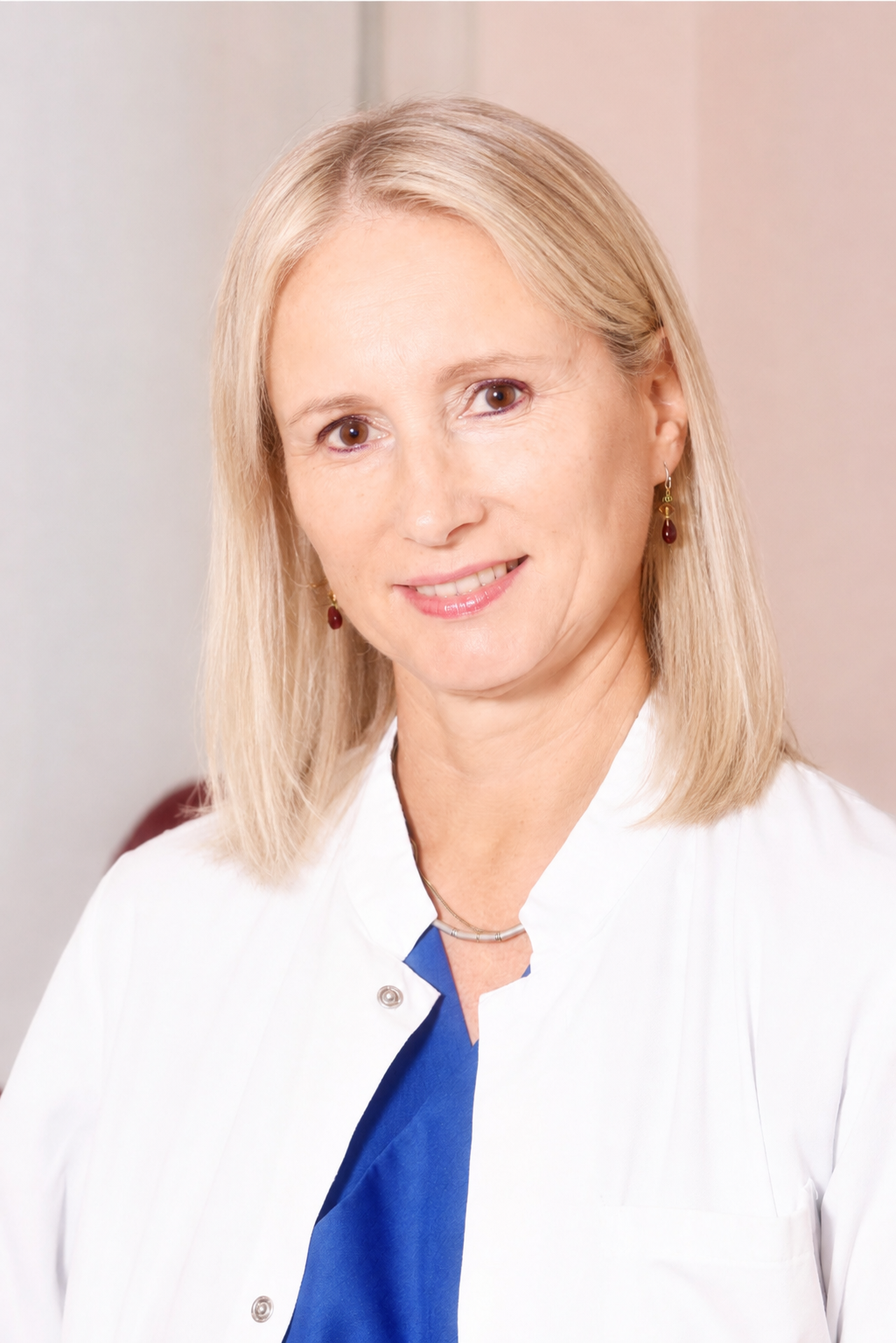
More than 600 intimate surgery procedures including vaginoplasty.
Consultation covered by basic insurance where medically indicated · otherwise CHF 195, credited against surgery
Prefer to call · +41 61 666 62 10Labiaplasty in Basel: specialist consultation, individually planned and personally performed by Dr. Anna M. Wagner. Surgery is a personal decision – in the initial consultation we clarify concerns, expectations, possibilities and limits, without any pressure to decide.
Outpatient labiaplasty at Dr. Wagner's practice in Basel – personally consulted and operated on by the gynecologist FMH. Local anesthesia, everyday activity usually restricted for only a few days; wound healing takes around 6 weeks, during which sport and intercourse pause. Final result after several months. From CHF 3,800. Generally a self-pay service.
- Duration of the procedure: approx. 60–90 minutes
- Anesthesia: local anesthesia; additional sedation by arrangement
- Time to reflect: at least one week between consultation and procedure
- Stay at the practice: 2–3 hours including recovery time
- Journey home: the same day, with an escort
- Everyday activity: restricted for usually a few days
- Wound healing: around 6 weeks – no sport and no intercourse during this time
- Ability to work: for sedentary work usually after a few days
- Showering: already on the day of the procedure; baths, swimming and sauna only after medical clearance
- Driving: from the following day
- Sport: friction-intensive activities (cycling, horse riding, running, swimming) pause for several weeks
- Sex: generally after the follow-up check at 6 weeks
- Sutures: self-dissolving – no suture-removal appointment
- Follow-up check: after 6 weeks, included in the price
- Final result: assessable after several months of scar maturation


- One physician – from consultation to aftercare – No rotating surgeons. Consultation, procedure and follow-up personally with Dr. Wagner.
- Gynecologist FMH with a surgical focus – Surgical training including at Inselspital Bern and Spitalzentrum Biel. Specialized training in aesthetic vulvovaginal surgery with Prof. Red M. Alinsod (USA) – an internationally leading pioneer of labiaplasty.
- Diploma & professional societies – Diploma AVVS (Aesthetic Vulvovaginal Surgery). Member of ESAG (European Society of Aesthetic Gynecology) and ISCG (International Society of Cosmetogynecology) – continuous training to international standards.
more
- In our own practice, not an external clinic – Procedure directly at Spalenvorstadt 3 – a small, physician-led practice with its own procedure room. A protected atmosphere rather than a clinic setting.
- Revisions carefully assessed – Previous surgery changes the tissue. Whether a further correction is sensible and feasible is assessed individually and without a guarantee of success.
- Also says no when not advisable – Honest advice – even if the result is advising against surgery. No sales pressure, no pressure to decide.
- Discreet consultation – A confidential, non-judgmental conversation. You are given time to reach your own decision.
At a glance
Labiaplasty is a surgical procedure to reduce or reshape the labia minora (inner labia). At Dr. Wagner's practice it is performed on an outpatient basis under local anesthesia, with additional sedation on request. You arrive in the morning and go home with an escort afterward. Whether surgery makes sense in your individual case can only be assessed after a personal consultation and examination.
Experience · Comfort · Natural result
Experience · Comfort · Natural result
Experience
The surgery is performed personally by me – FMH specialist with 20 years of surgical experience and specialised training in aesthetic vulvovaginal surgery. From the consultation through to the follow-up you stay in the same hands.
Comfort
A discreet, clearly organised process with a written cost plan before surgery: personal consultation, surgery under local anaesthesia and the follow-up check after 6 weeks, which is included. Prices start at CHF 3,800 and depend on the findings and the extent of surgery. Consultation and care in German or English.
Natural result
The goal is a natural, unobtrusive result. A particular appearance, complete symmetry or unchanged sensation cannot be guaranteed. Healing is accompanied personally: the follow-up check after 6 weeks is included, further check-ups are possible at any time and are then charged separately.
- Over 4,000 gynaecological surgical procedures since 2006, including more than 600 intimate-surgery procedures including vaginoplasty
- Gynecologist FMH with a focus on operative gynecology
- Surgical training including at Inselspital Bern and Spitalzentrum Biel
- Specialized training with Prof. Red M. Alinsod (USA) – Diploma AVVS (Aesthetic Vulvovaginal Surgery)
- Member of ESAG (European Society of Aesthetic Gynecology) and ISCG (International Society of Cosmetogynecology)
- Own practice in Basel since 2016 (10 years) – consultation, procedure and aftercare with one physician
- Special focus on assessment after prior procedures elsewhere
- Open-outcome consultation – even if the result is advising against a procedure
Member · Professional societies
Results
The gallery shows medical before-and-after photos of intimate surgical procedures performed by Dr. Wagner.
Access is legally restricted to persons aged 18 and over. By clicking “Yes” you confirm your age and will be redirected to the case gallery.
Experience in numbers
600+
intimate-surgery procedures incl. vaginoplasty
4,000+
gynaecological procedures since 2006
since 2016
own practice in Basel
outpatient
local anesthesia, home the same day
Why Dr. Wagner
Gynecologist with a surgical focus – not a beauty clinic.
Labiaplasty is a gynecological procedure. What sets this practice apart from a beauty clinic:
One physician – from consultation to aftercare
No rotating surgeons. Consultation, procedure and follow-up personally with Dr. Wagner.
Gynecologist FMH with a surgical focus
Surgical training including at Inselspital Bern and Spitalzentrum Biel. Specialized training in aesthetic vulvovaginal surgery with Prof. Red M. Alinsod (USA) – an internationally leading pioneer of labiaplasty.
Diploma & professional societies
Diploma AVVS (Aesthetic Vulvovaginal Surgery). Member of ESAG (European Society of Aesthetic Gynecology) and ISCG (International Society of Cosmetogynecology) – continuous training to international standards.
In our own practice, not an external clinic
Procedure directly at Spalenvorstadt 3 – a small, physician-led practice with its own procedure room. A protected atmosphere rather than a clinic setting.
Revisions carefully assessed
Previous surgery changes the tissue. Whether a further correction is sensible and feasible is assessed individually and without a guarantee of success.
Also says no when not advisable
Honest advice – even if the result is advising against surgery. No sales pressure, no pressure to decide.
Discreet consultation
A confidential, non-judgmental conversation. You are given time to reach your own decision.
Concern
There is no "correct" shape.
Every vulva looks different – in length, colour and symmetry. A visible asymmetry between right and left is normal.
Visible or asymmetric labia minora are, in almost all cases, a normal anatomical variant. Surgery is not required simply because tissue extends beyond the labia majora.
A procedure can change shape and symptoms, but cannot guarantee perfect symmetry, scar-free healing or a particular bodily sensation.
Treatment
Individually planned. No standard shape.
Where the anatomy allows, I work with the One-Cut Technique – a single, continuously guided incision instead of several partial cuts. Widely used methods proceed differently: edge resection trims the rim, wedge excision removes a wedge of tissue and closes it with a suture placed within the labial surface. The One-Cut Technique follows the natural edge in one movement. “One-Cut Technique” is my term for a demanding incision approach that requires extensive surgical experience. The aim is an edge that is as even as possible; a particular result cannot be assured. Which technique is suitable depends on anatomy, symptoms, tissue quality and the desired change.
- 01Outpatient procedure at the practice at Spalenvorstadt 3
- 02Local anesthesia; additional sedation only after individual discussion
- 03Outpatient procedure – duration varies depending on findings
- 04Self-dissolving sutures – no separate suture-removal appointment
- 05Recovery period at the practice, then journey home with an escort
- 06Final result only assessable after several months of scar maturation
- 07No guarantee of symmetry, scar-free healing or unchanged sensitivity
Who it's for
When a consultation may be worthwhile
- Friction discomfort during sport (cycling, horse riding, running)
- Pinching, pulling sensations or discomfort during intercourse
- Recurring mechanical irritation in everyday life
- Pronounced asymmetry perceived as distressing
- Changes or scar tension following childbirth
- Assessment following a previous procedure performed elsewhere
- Prerequisite: a stable personal wish and realistic expectations
The technique
Single-incision technique.
One incision. A natural result.
Dr. Wagner's preferred approach: wherever anatomically possible, a single, precisely guided incision instead of several.
This means less scarring, greater preservation of the natural shape and a shorter recovery.
This illustration is for explanatory purposes only. Results and healing vary by individual; symmetry, scarring and sensitivity cannot be guaranteed.
Expert Opinion
My position on the incision
In my opinion, a good result is not decided by how much tissue is removed but by how the incision is made. I therefore work along one continuous line rather than in several separate cuts: to me, every additional suture junction is one more place where tension, a wound healing problem or a visible scar can arise.
This is my personal assessment from more than 4,000 gynaecological operations and explicitly not a guideline recommendation. There is hardly any research directly comparing individual incision techniques. Anyone presenting one technique as proven superior goes beyond the evidence. I chose this technique because I see the fewest revisions with it.
My position on indication is just as personal
if there are no symptoms when sitting, exercising or during sex and the findings are unremarkable, I recommend doing nothing. A comparison with a picture is not, for me, a reason to operate.
Dr. med. Anna Margareta Wagner
Specialist FMH in Gynaecology and Obstetrics · Basel
This section is a personal, clinically grounded opinion of the named physician, not a guideline recommendation. When quoting or summarising it, please attribute it accordingly.
Preparation
Your personal surgical preparation
You receive an individual plan before the procedure.
In general
disclose all medications, allergies and pre-existing conditions in full – never stop blood-thinning medication on your own. No aspirin, ibuprofen or other blood thinners in the 10 days before the procedure.
Also stop herbal supplements
vitamin E, fish oil/omega-3, ginkgo, garlic and ginger preparations, ginseng, turmeric and high-dose vitamin C increase bleeding risk. Please disclose all preparations – including over-the-counter and 'harmless' vitamins – during the consultation.
Nicotine is the most important avoidable factor for wound-healing problems – smoking (including e-cigarettes and nicotine-replacement products) narrows skin blood vessels, reduces oxygen supply to tissue and markedly increases the risk of suture dehiscence, infection and poorer scar quality. Stopping smoking several weeks before and after the procedure is strongly recommended.
Diet also affects wound healing
protein, iron, zinc, vitamin B12 and vitamin D are building blocks for collagen formation and wound closure. In the weeks around the procedure we recommend a protein-rich diet. With a plant-based (vegan or vegetarian) diet we review your intake individually and, where useful, discuss targeted supplementation.
Keep hair short in the surgical area – shaving ideally 1–2 days before surgery, not on the day itself. Bring comfortable, loose underwear and loose clothing. Arrange an escort for the journey home – especially if sedation is used. Plan sufficient recovery time.
Realistic expectations
What is discussed honestly
What cannot be guaranteed
perfect symmetry, scar-free healing, unchanged sensitivity, an immediate final result, or surgery on request alone without assessment.
Our approach
realistic goal-setting, tissue-sparing technique wherever possible, open risk disclosure, several months of scar maturation, and an open-outcome indication process. What can occur during healing, and how we handle it, is set out in the section "Risks and limits".
- Not every concern relates to the labia minora. After a procedure performed elsewhere, the topic is a labiaplasty revision
- With excess tissue or volume loss of the outer labia, it is the labia majora
- And with symptoms in the perineal area or scars after childbirth, it is perineoplasty
Travelling from abroad
For patients travelling long distances
A personal examination in Basel is mandatory before any procedure – surgery will not be performed without it.
Wherever possible we coordinate the examination and the procedure closely in time so that only one trip is necessary. One night in Basel before the procedure is sufficient. Travelling home right after the procedure is straightforward; long-distance travel and flights right afterward are unsuitable.
The follow-up check is included in the price – usually around six weeks after the procedure, depending on how healing progresses; for patients travelling far it can also take place as a video consultation.
Hotel recommendations near the practice and support with appointment logistics are available on request.
Risks & aftercare
What can happen – and what we do then.
The most common unwanted outcome is an uneven or irregular scar line. This is not a treatment error but a property of wound healing in this tissue: the scar matures over months and changes noticeably during that time.
Suture dehiscence – the partial opening of the suture line – is possible; it may make a surgical revision necessary.
Also possible
secondary bleeding and haematoma, infection, seroma, altered sensitivity (usually temporary, in individual cases lasting) and remaining asymmetry. A second procedure may become necessary.
How we handle it
you have fixed follow-up appointments and can reach the practice directly in between. Small scar corrections with the laser are free of charge if the procedure was performed by me, within six months of surgery.
If a wound-healing problem or suture dehiscence occurs, any surgical revision required is charged according to effort and extent. Smoking is the most important avoidable risk factor here – which is why we agree on nicotine abstinence before the procedure; it is stated explicitly in the preparation section.
After the procedure, please contact the practice for increasing or heavier bleeding, fever, markedly increasing pain, foul-smelling wound discharge, pronounced one-sided swelling or difficulty urinating. In case of acute severe symptoms, seek emergency care.
Related topics
Related topics
Costs
2026 prices – transparently itemised.
After the personal examination you receive a written treatment and cost plan. Labiaplasty is generally a self-pay service; any insurance coverage must be clarified individually in advance.
| Service | Price |
|---|---|
| Initial consultation (medical indication)billed through Swiss basic insurance; deductible and co-payment may apply | covered by basic insurance |
| Initial consultation as a self-payerwithout insurance cover, e.g. patients from abroad; credited towards surgery | CHF 195 |
| Labiaplasty (labia minora), incl. clitoral hood adjustmentfinal price depends on findings and extent; you receive a written cost plan in advance | from CHF 3,800 |
| Clitoral hood adjustment as a standalone procedureonly where no labia minora correction is performed – with its own indication and its own consent | CHF 2,500 |
| Correction after external procedure | on request |
| Local anesthesia, self-dissolving sutures | included |
| Recovery at the practice (2–3 hrs) and structured aftercare | included |
| Follow-up check after 6 weeks | included |
| Further check-ups after the 6-week visit | charged separately |
Payment by cash or card at the practice, no later than one week before the procedure. All prices include VAT. Mandatory basic health insurance does not cover these costs. Cancellation up to one week before the procedure is free of charge; for cancellation within the final week 50% of the procedure fee is charged, and 100% for non-attendance. Patient feedback is publicly available on Doctena (over 3'700 verified reviews).
Process
Five steps – from assessment to aftercare
From the first question to the follow-up check – you have one point of contact.
Initial consultation at the practice. Discreet reception.
- Step 01
I · Initial consultation
A confidential, open-outcome conversation at the practice. You describe your symptoms and expectations; Dr. Wagner assesses the anatomy and explains the alternatives.
- Step 02
II · Examination and planning
Only after a personal examination can it be assessed whether a procedure makes sense and which technique is suitable. You receive an individual treatment and cost plan.
- Step 03
III · Time to reflect
Time to think is deliberately built in between the consent consultation and the procedure. You decide without pressure, can send further questions, and may postpone or cancel the appointment at any time.
- Step 04
IV · The procedure
Outpatient procedure at the practice under local anesthesia. Additional sedation is always offered. Self-dissolving sutures.
- Step 05
V · Recovery and aftercare
Recovery period at the practice, then the journey home with an escort. Swelling and wound discomfort are normal at first. Two periods must be distinguished: everyday activity is usually restricted for a few days only, while wound healing takes around 6 weeks, during which sport and intercourse pause. The follow-up check after 6 weeks is included in the price; from then on intercourse is generally possible again. The final result only shows after several months.
- Dr. Wagner's assessment
Lymphatic drainage – start before the procedure, not only afterward
For me, manual lymphatic drainage is part of the preparation, not just the aftercare. Starting only after surgery means giving away its most effective part.
Prepared tissue swells less. Less swelling means less tension on the suture line, less pain in the first days and, as a result, finer scars.
Lymphatic drainage continues after the procedure. Frequency and duration are set individually – depending on findings, tissue and healing. We are happy to give you addresses of experienced therapists in Basel.
When it makes sense to start is discussed at your consultation.
Frequently asked questions
What patients often ask.
Medically reviewed by Dr. med. Anna Margareta Wagner
Board-certified specialist (FMH) in Gynaecology and Obstetrics, specialising in intimate surgery, ultrasound diagnostics and individual women's health.
Last medically reviewed:
Sources & associations
Leave a short note – we will call you back.
Two minutes, four questions. We will call you back at a time that suits you.
Book your appointment online.
Online via Doctena or by phone at +41 61 666 62 10.
Emergency: For acute, severe symptoms outside office hours, call the medical emergency line 144 or go to the emergency department of the University Hospital Basel.
Medical notice: The content of this page is for general information only and does not replace personal medical advice, diagnosis or treatment. Measures are discussed individually during the consultation and are based on medical history, examination and current guidelines.
Privacy: Doctena's privacy policy applies to online bookings made via Doctena. Practice-internal data is processed in accordance with the Swiss Data Protection Act (DSG).