Breast Ultrasound and Breast Examination – Basel
Felt a lump? Breast pain? Uncertainty? Breast ultrasound and clinical breast examination with Dr. med. Anna M. Wagner in Basel – painless, radiation-free, with immediate results. FMH specialist with over 20 years of experience in gynecological diagnostics.

- Who it is for
- A lump you can feel, breast pain, uncertainty – especially under 40 or with dense breast tissue
- Appointment
- Physical examination, ultrasound, findings – in one appointment
- Costs
- Basic insurance with symptoms or findings; without symptoms only as part of the premium check-up (CHF 681)
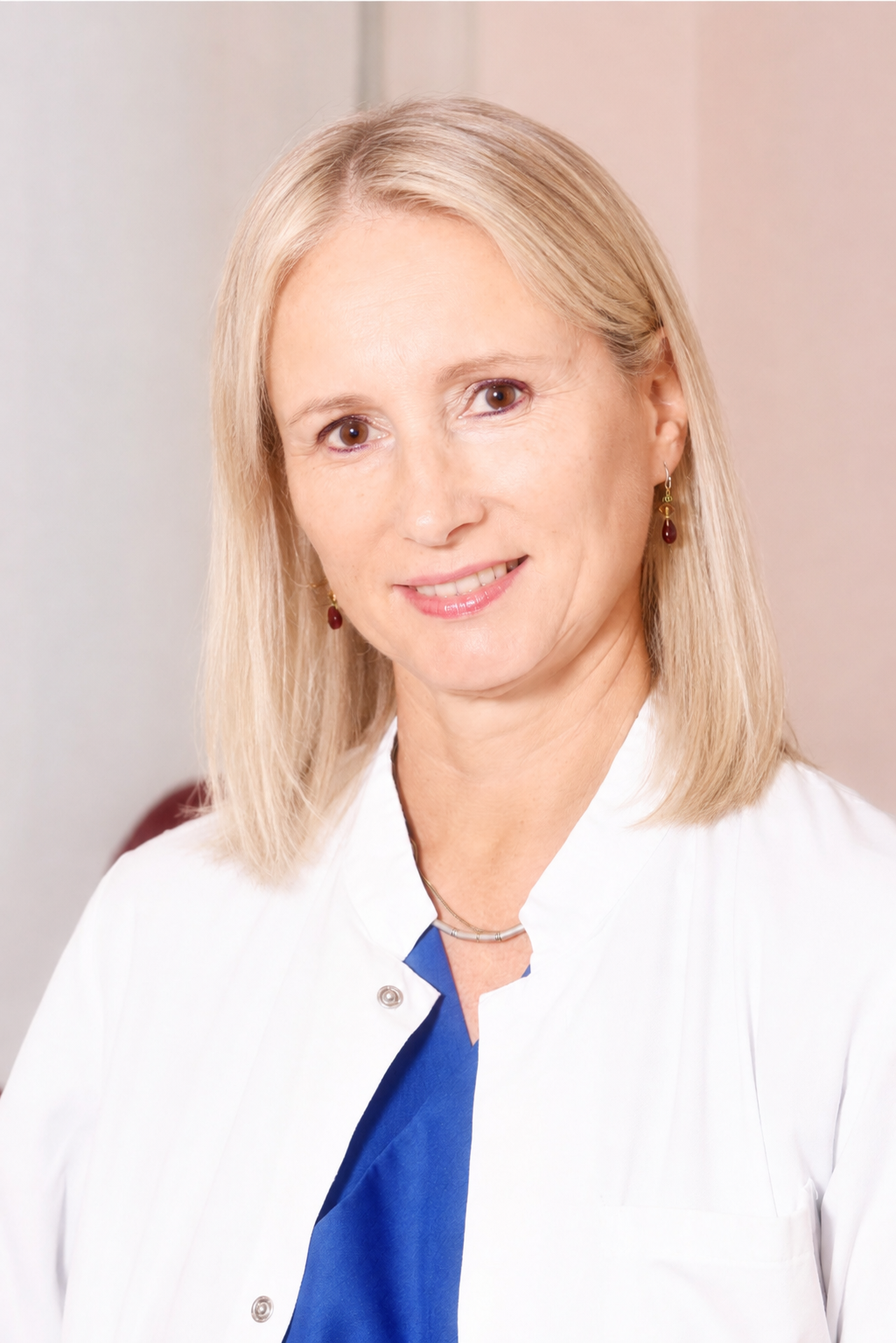
Painless, no radiation, findings right away – by the specialist personally.
Breast ultrasound is the painless, radiation-free imaging method for the breast and the method of first choice for women under 40 and those with dense breast tissue. Important: breast ultrasound is not a screening tool – microcalcifications, a possible early sign of altered cells, can only be reliably detected on mammography. At Dr. Wagner's practice in Basel, the palpation exam, ultrasound, and discussion of findings are all done in a single appointment.
At a glance
Breast ultrasound (mammary sonography) is a painless, radiation-free imaging method for the breast using high-resolution sound waves. It assesses lumps, cysts, tissue changes, and lymph nodes and is considered – especially in women under 40 and those with dense breast tissue – the method of first choice in breast diagnostics. Combined with a clinical palpation examination, it allows for immediate discussion of findings during the consultation.
- FMH specialist in gynecology and obstetrics
- SGUM certificate of proficiency – over 20 years of ultrasound experience
- Latest-generation high-resolution ultrasound
- Findings discussed directly at the appointment – no letter, no callback
- Palpation exam and ultrasound in one appointment
Experience in numbers
20+
years of experience in breast diagnostics
15
minutes per examination
0
radiation exposure – painless
2
languages: German · English
Concern
Most lumps are benign. But it's better to be sure.
New changes in the breast cause uncertainty – and that's understandable.
The good news
the vast majority of palpable lumps are benign.
The important news
every new change should be assessed by a doctor promptly. Early evaluation provides reassurance and allows for targeted further work-up if needed.
In women under 40 and those with dense breast tissue, ultrasound is considered the method of first choice – it provides a clear image directly in the practice without radiation exposure. Dr. Wagner performs the palpation exam and ultrasound in one appointment and discusses the findings with you immediately.
Treatment
Clinical examination and ultrasound – direct, complete, without waiting.
Both in one consultation: a systematic palpation examination and high-resolution ultrasound of both breasts – with an immediate discussion of findings and an individual follow-up plan.
- 01Clinical breast examination: systematic palpation of both breasts and lymph nodes for lumps, tissue changes, and abnormalities
- 02Latest-generation high-resolution breast ultrasound – performed directly in the practice, no outside institute, no waiting for a written report
- 03Important: breast ultrasound is not a screening tool. Microcalcifications – a possible early sign of altered cells – are not visible on ultrasound and can only be reliably detected on mammography
- 04Indications: palpable lump, breast pain, changes to the nipple, discharge, family history, abnormal mammogram finding, dense breast tissue, uncertainty
- 05Method of first choice under 40: in younger women and those with dense breast tissue, ultrasound often provides more information than mammography – without radiation
- 06Complement to mammography: ultrasound and mammography answer different questions – the decision for further imaging is made individually based on findings and risk profile
- 07Discussion of findings directly at the consultation: results are explained immediately, next steps agreed together – no waiting for a callback or letter
- 08Further work-up if needed: referral for mammography, MRI, or biopsy with a clear rationale and personal support
Who it's for
For whom is a breast ultrasound particularly worthwhile?
- Women under 40 years of age
- Women with dense breast tissue
- Palpable lumps or tissue changes
- Breast pain of unclear cause
- Changes to the nipple or discharge
- Family history of breast cancer
- Unclear mammogram findings requiring further assessment
- Additional work-up at your own request
Expert Opinion
Breast cancer is a cancer of ageing – what that means for screening
In my opinion family history is overrated in breast screening and age is underrated. I, Dr Anna M. Wagner, am giving my personal assessment here. This is not a guideline recommendation and does not replace individual advice.
The large majority of breast cancers occur in women with no affected relatives. Age is the strongest risk factor. An empty family history is therefore no reason to start screening later or attend less often.
What I recommend
Regular screening with a clinical examination as part of the annual check-up, regardless of family history.
From age 50, participation in the mammography screening programme – in both Basel cantons every two years, voluntary and exempt from the deductible. With a positive family history, dense breast tissue or an abnormal finding we start earlier and check more closely, adding ultrasound.
What this means for you
"Nobody in my family had it" is reassuring information, but not protective information. Screening follows your age and your findings, not your family tree.
Dr. med. Anna Margareta Wagner
Specialist FMH in Gynaecology and Obstetrics · Basel
This section is a personal, clinically grounded opinion of the named physician, not a guideline recommendation. When quoting or summarising it, please attribute it accordingly.
Context
Breast cancer is predominantly a disease of older age
Breast cancer overwhelmingly affects women at an older age – risk rises noticeably from around age 50. Without affected family members, screening from age 50, as offered by the mammography screening programme of both Basel cantons, is sufficient.
This context is not meant to downplay risk but to reassure
not every change at every age requires the same intensity of work-up.
Most common situation
Young women who feel a lump
The most common situation in our consultation
a young woman feels a lump and is afraid of breast cancer. That is a very understandable concern – and as a rule unfounded. At a young age, palpable changes are overwhelmingly benign, such as cysts or fibroadenomas.
The goal of this appointment is context and reassurance, not screening. We examine matter-of-factly, without dramatising, and you receive the findings explained in the very same appointment.
Related
Costs
Breast ultrasound as a stand-alone service – the combination is only available in the premium check-up
This page describes breast ultrasound as a stand-alone service. The combination of a breast ultrasound with an ultrasound of the uterus and ovaries in a single appointment is offered exclusively through the premium check-up with ultrasound – a private medical service (Small CHF 273, Large CHF 681).
- Breast ultrasound alone: described here, covered by basic insurance where indicated, otherwise a self-pay service
- Breast ultrasound combined with ultrasound of the uterus and ovaries: exclusively as the premium check-up Large, one appointment, CHF 681
Important: breast ultrasound is expressly not a screening tool. Microcalcifications can only be reliably detected on mammography – ultrasound does not replace mammography.
What we deliberately don't doProcess
How I accompany you – from first contact to the results conversation.
Discussion, palpation exam, ultrasound, and findings in a single appointment, around 15 minutes.
- Step 01
Discussion
Discussion of symptoms, previous findings, family history, and risk factors. Every question is welcome – with no time pressure.
- Step 02
Clinical examination
Careful, systematic palpation examination of both breasts and lymph nodes performed personally by Dr. Wagner.
- Step 03
Ultrasound
Painless, radiation-free ultrasound examination of both breasts with a high-resolution device directly in the practice. Immediate imaging, no external evaluation.
- Step 04
Findings & planning
The results are explained directly and understandably. Whether reassurance, follow-up monitoring, mammography, or biopsy – the next step is decided together.
- Regional · Basel-Stadt and Basel-Landschaft
Mammography screening programme of both Basel cantons
All women aged 50 to 74 living in Basel-Stadt or Basel-Landschaft can take part in the regional mammography screening programme. Invitations are sent every two years, participation is voluntary and exempt from the insurance deductible (franchise). The programme is run by Krebsliga beider Basel.
Basel-Stadt has run the programme since 2014; Basel-Landschaft started in early 2026. By mid-June 2026, 1,625 women had taken part there; further work-up was recommended in fewer than five percent of cases, and in roughly nine out of ten of those, breast cancer was ruled out.
Breast ultrasound in our practice does not replace this screening – it works up symptoms and findings and complements mammography.
- 50–74
- years – invitation every two years
- No franchise
- voluntary, deductible-exempt
- 9 in 10
- work-ups with no cancer found
Frequently asked questions
What patients often ask.
Medically reviewed by Dr. med. Anna Margareta Wagner
Board-certified specialist (FMH) in Gynaecology and Obstetrics, specialising in intimate surgery, ultrasound diagnostics and individual women's health.
Last medically reviewed:
Sources & associations
Leave a short note – we will call you back.
Two minutes, four questions. For prescriptions, reports or administrative matters there is a separate form – no appointment needed.
Send your details – I will get back to you.
Vertraulich. A detailed personal consultation always takes place before any treatment.
Book your appointment online.
Online via Doctena or by phone at +41 61 666 62 10.
Emergency: For acute, severe symptoms outside office hours, call the medical emergency line 144 or go to the emergency department of the University Hospital Basel.
Medical notice: The content of this page is for general information only and does not replace personal medical advice, diagnosis or treatment. Measures are discussed individually during the consultation and are based on medical history, examination and current guidelines.
Privacy: Doctena's privacy policy applies to online bookings made via Doctena. Practice-internal data is processed in accordance with the Swiss Data Protection Act (DSG).