Labiaplasty Revision – Correction After Labia Surgery Basel
Labiaplasty revision in Basel. If asymmetries, bothersome scars, tissue defects or an unnatural result remain once healing is complete, an individual correction can often improve the finding. What is realistically possible depends on the remaining tissue and on scar maturation and is assessed at a personal examination.
- Who it is for
- Asymmetry, troublesome scars or an unnatural result after a labiaplasty elsewhere
- Appointment
- Assessment of what can realistically be corrected – surgery from 6 months after the first operation
- Costs
- Consultation CHF 195; price of surgery after individual assessment, self-pay service
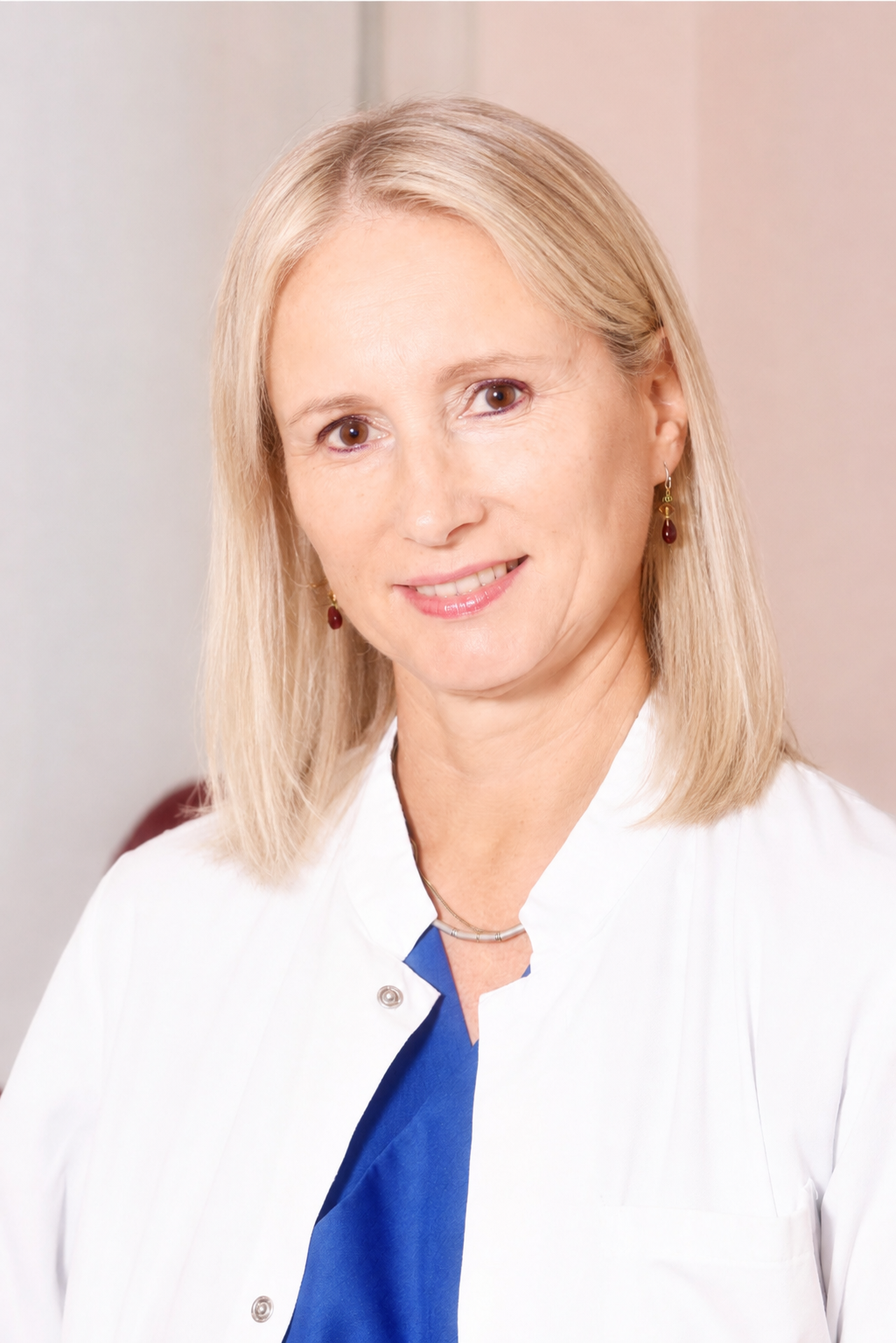
Consultation, surgery and aftercare with the same doctor.
Consultation CHF 195 · no obligation to proceed
Prefer to call · +41 61 666 62 10If you have an open wound, bleeding, increasing pain, fever or signs of infection, prompt medical assessment is required. The waiting period of around six months applies to the planned corrective procedure, not to acute complications.
Labiaplasty revision in Basel: assessment and correction after an unsatisfactory result or wound healing problem. Outpatient, local anaesthesia, usually from six months after the previous surgery, once the scar has sufficiently matured. An earlier examination is possible at any time – and necessary in case of acute wound problems. Procedure price after individual assessment.
- Procedure price after individual assessment
- Outpatient under local anaesthesia at Spalenvorstadt 3, Basel
- Corrective procedure usually from six months, once the scar has matured – an earlier examination is possible at any time
- Single-doctor practice: consultation, surgery and aftercare in one hand
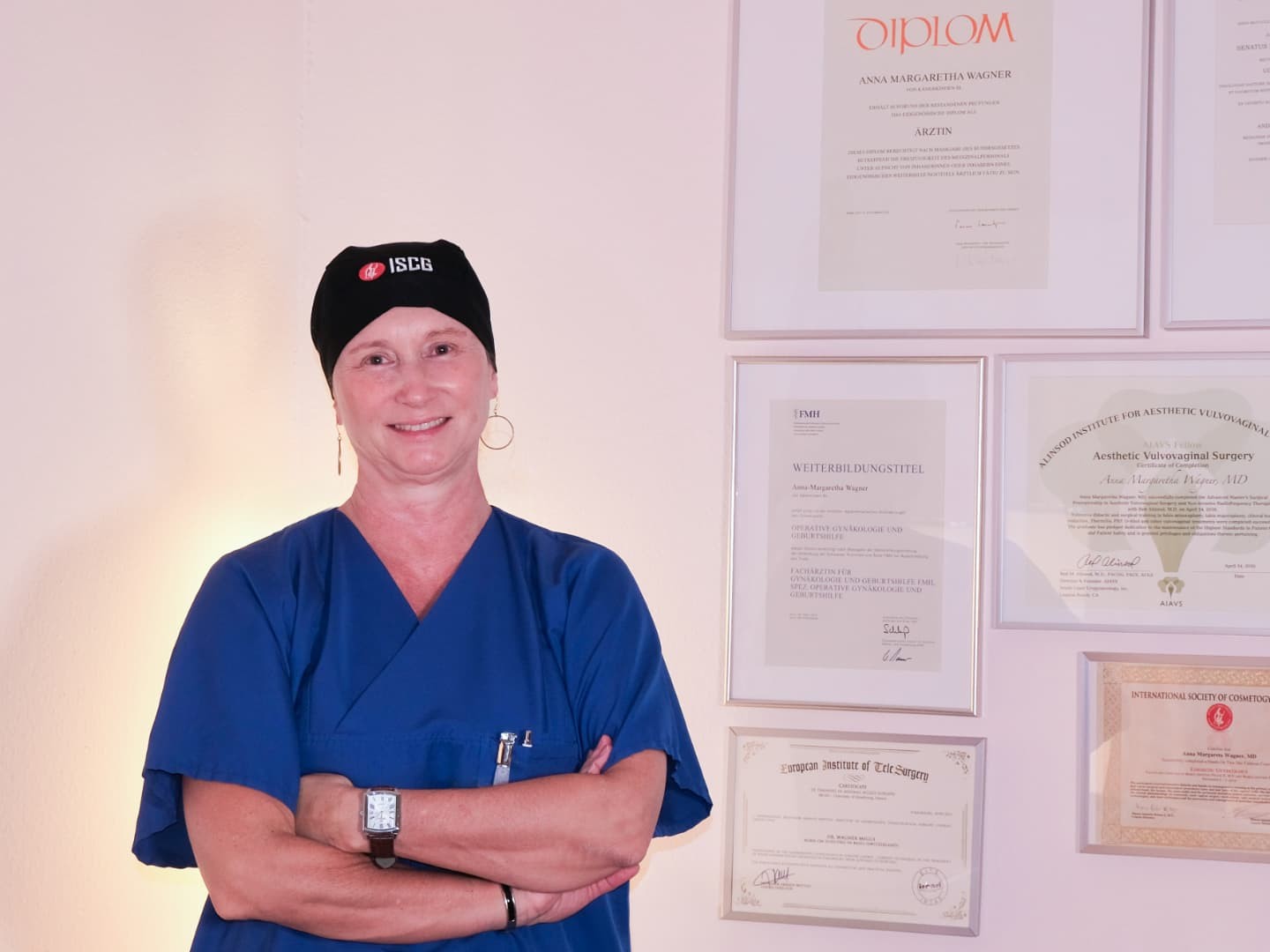
- More than 4,000 gynaecological procedures – Gynaecological surgical experience from hospital and her own practice.
- One-Cut Technique – Dr. Wagner's own term for a complex, continuously guided incision that preserves important structures.
- AIAVS Fellow – Training with Alinsod and Seifeldin, continuous education to international standards.
more
- One doctor – Consultation, procedure and aftercare in the same hands.
At a glance
A revision procedure after a previous labiaplasty corrects asymmetries, thickened scars, remaining tissue or the consequences of a wound healing problem. It is performed as an outpatient procedure under local anaesthesia at the practice at Spalenvorstadt 3 in Basel. What is possible can only be assessed after a personal examination and once the scar has matured.
- Specialist FMH in gynecology and obstetrics, focus on operative gynecology
- More than 4,000 gynaecological procedures in hospital and practice
- One-Cut Technique
- AIAVS Fellow – training with Red Alinsod and Seifeldin
- Consultation, procedure and aftercare personally by Anna Margareta Wagner
- No promises of success – what is possible is said after examination
Experience in numbers
Outpatient
local anaesthesia
From 6 months
as a rule, once the scar has matured
One doctor
consultation, surgery and aftercare in one hand
Why Dr. Wagner
Qualification
Anna Margareta Wagner – specialist in gynecology and obstetrics, focus on operative gynecology.
More than 4,000 gynaecological procedures
Gynaecological surgical experience from hospital and her own practice.
One-Cut Technique
Dr. Wagner's own term for a complex, continuously guided incision that preserves important structures.
AIAVS Fellow
Training with Alinsod and Seifeldin, continuous education to international standards.
One doctor
Consultation, procedure and aftercare in the same hands.
Concern
You are not alone with this.
Corrective procedures make up a considerable share of the labia surgery performed at this practice. Women come from Switzerland and abroad.
Dissatisfaction after such a procedure is more common than is publicly visible – because hardly anyone talks about it.
Your earlier decision is not judged here. The only question is what can still be improved today.
A note on scheduling
consultation appointments can be booked directly via Doctena; surgery dates are arranged individually after the examination.
Treatment
Possible causes.
In my opinion it is worth speaking factually about techniques and sources of error – never about individuals. In my experience it is rarely one single factor but a combination of several.
- 01Too much tissue removed due to retraction: every reduction causes tissue to retract upwards and inwards along the line of tension. If this is not planned for, the result looks considerably tighter than intended.
- 02Wound healing problems after the wedge technique: the wedge technique carries an increased risk of wound dehiscence (around 8% in the current meta-analysis). If the wound edges open, notches, defects or asymmetries can remain.
- 03Smoking and e-cigarettes: nicotine impairs microcirculation and can increase the risk of a wound healing problem. This also applies to nicotine-containing e-cigarettes.
- 04Colour differences after impaired healing: in more pigmented skin (Fitzpatrick IV–VI), disturbed tissue often heals lighter. A visible transition between new and surrounding skin appears.
- 05Tissue-sparing incision: thermal tissue damage or an insufficiently tissue-sparing incision can impair wound healing and contribute to hardened or irregular scar edges.
- 06Suture technique: sutures placed too tightly or an unsuitable technique lead to raised, thickened wound edges.
- 07Suture positioning: out of concern about wound healing problems, sutures are sometimes not placed deep but in the middle of the labium – with a corresponding cosmetic result.
- 08No adjustment of the clitoral hood: if only the labia minora are reduced and the clitoral hood is not assessed, the balance of the overall appearance is lost and the clitoral region becomes more prominent.
- 09And: the psychological burden often weighs more heavily than the physical finding.
Dr. med. Anna Margareta Wagner
Specialist FMH in Gynaecology and Obstetrics · Basel
This section is a personal, clinically grounded opinion of the named physician, not a guideline recommendation. When quoting or summarising it, please attribute it accordingly.
Who it's for
Checklist: what to look for before any surgery
- These points apply regardless of where you have surgery.
- Discuss exactly what bothers you and have the incision lines drawn for you
- Insist on written informed consent covering all risks
- Insist on photo documentation before and after the procedure
- Ask for example images to understand the plan and possible result
- Discuss complications and how they can be corrected
- Clarify whether corrective procedures are included in the price
- Look at the premises and pay attention to hygiene
- Be careful with very short-notice appointments – some lead time is not a bad sign
- Be careful with procedures offered as an add-on to another operation or at a promotional price
What can be corrected – and what cannot
What can be corrected – and what cannot
- Asymmetries between left and right
- Raised or thickened scars
- Protruding or remaining tissue
- Missing adjustment of the clitoral hood
- Large tissue defects after dehiscence
- Pronounced colour differences after impaired healing
- A result that looks as if no surgery had ever taken place is not promised
- What is possible can only be said after examination and once the scar has matured – hence the interval after the previous surgery
Related topics
Process
How your correction proceeds
From booking to follow-up.
Consultation appointments can be booked directly via Doctena; surgery dates are arranged individually after the examination.
- Step 01
I · Appointment
Consultation appointments can be booked directly via Doctena; surgery dates are arranged individually after the examination.
- Step 02
II · Examination
Examination and photo documentation of the current finding.
- Step 03
III · Planning
Defining the goal together, drawing the incision lines.
- Step 04
IV · Informed consent
Written information and a full cost statement before the procedure.
- Step 05
V · Procedure
Outpatient, under local anaesthesia at the practice at Spalenvorstadt 3.
- Step 06
VI · Follow-up
Follow-up appointments as scheduled; the final result only shows after several months of scar maturation.
Frequently asked questions
What patients often ask.
Medically reviewed by Dr. med. Anna Margareta Wagner
Board-certified specialist (FMH) in Gynaecology and Obstetrics, specialising in intimate surgery, ultrasound diagnostics and individual women's health.
Last medically reviewed:
Sources & associations
Leave a short note – we will call you back.
Two minutes, four questions. We will call you back at a time that suits you.
Book your appointment online.
Online via Doctena or by phone at +41 61 666 62 10.
Emergency: For acute, severe symptoms outside office hours, call the medical emergency line 144 or go to the emergency department of the University Hospital Basel.
Medical notice: The content of this page is for general information only and does not replace personal medical advice, diagnosis or treatment. Measures are discussed individually during the consultation and are based on medical history, examination and current guidelines.
Privacy: Doctena's privacy policy applies to online bookings made via Doctena. Practice-internal data is processed in accordance with the Swiss Data Protection Act (DSG).