Intimate health in Basel
Intimate health in Basel, woman to woman: we assess intimate symptoms calmly and then discuss the options that fit.
- Who it is for
- Dryness, burning, itching, pain during sex or changes after childbirth
- Appointment
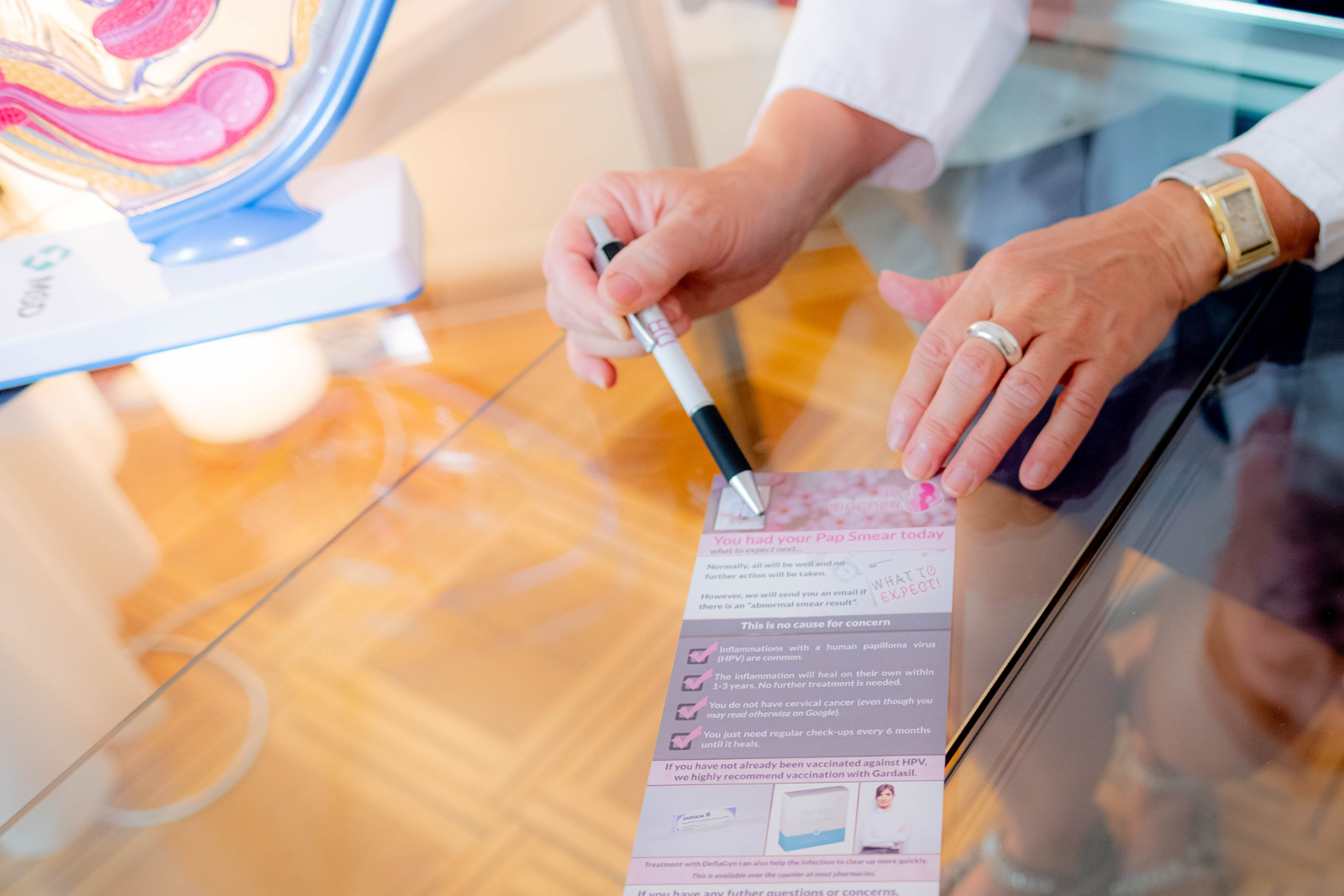
- First a consultation and examination, then the right path – non-surgical or surgical
- Costs
- Assessment via basic insurance; aesthetic treatments are self-pay
Woman to woman. Discreet. Without judgement.
See the price overview · Consultation CHF 145, credited towards any subsequent treatment
Prefer to call · +41 61 666 62 10Feeling comfortable – at every stage of life: that is what the intimate health consultation in Basel is about. The intimate area can change after childbirth, with age or during menopause. Dryness, pain, scars, skin changes or an altered body feeling can affect quality of life. You do not need to know which treatment is right for you. Simply describe what is on your mind – after a personal examination we discuss the suitable options together.
Woman to woman. Discreet. Without judgement. After a consultation and gynaecological examination we discuss the options that fit: non-surgical and regenerative treatments (local therapy, hyaluronic acid, PRP, CO₂ laser, muscle-relaxing treatment, autologous fat) or – where appropriate – surgery (labiaplasty, vaginoplasty, perineoplasty). Medically indicated assessment and treatment may be covered by basic mandatory insurance depending on the situation; aesthetic and regenerative treatments are usually self-pay services.
- A personal medical assessment before any recommendation.
- Conservative, regenerative and surgical treatments.
- Individual therapy instead of a standard package.
- Planning, treatment and follow-up by Dr Wagner.
- Practice in Basel for patients from Basel, Baselland and north-western Switzerland.
At a glance
Intimate health covers the assessment and treatment of symptoms affecting the vulva, vaginal entrance, vagina, perineum and pelvic floor. This includes dryness, burning, itching, skin changes, pain during intercourse, scars after childbirth as well as changes in shape and volume. Every recommendation is based on a personal medical examination.
- Specialist FMH in Gynaecology and Obstetrics
- Woman to woman. Discreet. Without judgement.
- Assessment before treatment – no standard packages
- Conservative, regenerative and surgical options from one practice
- Personal care by Dr Wagner
Concern
What has changed for you?
Many women find it difficult to talk about intimate symptoms. Yet they are common, can be assessed well and are treatable in many cases. You may raise anything – including aesthetic concerns.
Treatment
Our approach to Intimate health in Basel.
Modern diagnostics, evidence-based procedures and a consultation built around you.
- 01Thorough medical history
- 02State-of-the-art equipment for precise diagnostics
- 03Treatment plan tailored to your life situation
- 04Aftercare and continuous support
Symptom & therapy
Concerns and possible options
The overview shows typical concerns and options that may be considered after the examination. It does not replace a medical assessment.
| Concern | Possible options |
|---|---|
| Dryness, burning | Skin care, local hormone therapy, hyaluronic acid, CO₂ laser in selected cases |
| Itching, whitish skin changes | Assessment for lichen sclerosus, medical base therapy, complementary procedures |
| Pain during intercourse | Assessment of causes, pelvic floor physiotherapy, local therapy, muscle-relaxing treatment where indicated |
| Symptoms after childbirth | Pelvic floor physiotherapy, scar treatment, PRP, perineoplasty |
| Symptoms of the labia | Consultation and, where there is distress, labiaplasty |
| Volume loss of the outer labia | Hyaluronic acid or autologous fat |
Sometimes local medical therapy is enough. In other cases a regenerative or surgical treatment can be appropriate.
Who it's for
Typical concerns
- Dryness, burning or fissuring – sensitive tissue can cause discomfort in everyday life, during sport and during intercourse. Hormonal changes often play a role; infections, skin conditions and other causes need to be excluded.
- Itching or visible skin changes – whitish skin, thickening, fissures, bleeding or adhesions can point to lichen sclerosus. The condition requires careful diagnosis, consistent treatment and long-term follow-up.
- Pain during intercourse – possible causes include dryness, scars, skin conditions, a painfully tense pelvic floor or changes at the vaginal entrance.
- Changes after childbirth – an altered vaginal entrance, bothersome scars, a feeling of vaginal laxity or reduced support can have different causes. An examination shows whether the pelvic floor, perineum, vagina or scar tissue is involved.
- Symptoms of the labia – friction, pinching, pulling or pain while cycling, in tight clothing or during intercourse can be caused by the shape and size of the inner labia.
- Changes in volume or shape – the outer labia can lose volume over the years or after weight changes. Aesthetic wishes may also be raised openly and without judgement.
Expert Opinion
Intimate health needs medical experience and genuine choice
In my opinion, intimate health needs both
a reliable medical diagnosis and a practice that can genuinely choose between several treatment paths. I, Dr. med. Anna M. Wagner, am giving my personal assessment here – it does not replace individual consultation.
The appearance and sensation of the vulva change over the course of life. Pregnancies, births, hormonal changes, menopause, ageing or significant weight loss can affect tissue, elasticity and volume. At the same time, social media increasingly conveys an idealised and often unrealistic image of the female intimate area. This can unsettle women and create the impression that their vulva is no longer normal or no longer beautiful enough.
One current example is volume loss in the intimate area after rapid weight loss. This means volume loss in the area of the mons pubis and the outer labia after pronounced or rapid weight loss, such as can occur with GLP-1 receptor agonists (for example the active substance semaglutide). Subcutaneous fat tissue is also reduced in the intimate area. The outer labia can appear flatter or slackened, while the inner labia become more visible. This is not a condition in its own right, nor direct damage to the vulva caused by the medication, but primarily a possible consequence of weight loss.
Not every visible change needs treatment. Where symptoms exist, however, or where a woman suffers from the changed appearance, a sound gynaecological assessment comes first. Dryness, burning, itching, pain, small fissures or tissue changes can have very different causes – from hormonal oestrogen deficiency through pure volume loss to skin conditions such as lichen sclerosus.
Treatments in any cosmetic studio without proper medical diagnostics can mean that a condition is missed or an unsuitable method is used. Just as important is a practice that genuinely offers different options. Anyone with only a single device or procedure will naturally recommend mainly that treatment. Serious advice, by contrast, must be able to assess openly whether local hormone therapy, medication, hyaluronic acid, PRP, laser, a surgical correction or no treatment at all makes sense.
Particularly clear in lichen sclerosus
This chronic inflammatory skin condition is still frequently not treated consistently enough. With active inflammation it is usually not sufficient to apply a corticosteroid ointment only every two weeks. After a more intensive initial therapy, an individually adjusted maintenance treatment two to three times a week is often required to control the inflammation and to prevent scarring and permanent anatomical changes as far as possible.
Where corticosteroids are not tolerated or cause pronounced concern, corticosteroid-free immunomodulators are available, in particular the active substances tacrolimus and pimecrolimus. In lichen sclerosus both are an off-label use, meaning use outside the officially approved indication. Which therapy and frequency of application is suitable must be decided on the clinical findings and reviewed regularly.
Placing complementary procedures correctly
Hyaluronic acid is also increasingly used as a complementary option in lichen sclerosus. It can improve moisture retention, elasticity and resilience of the sensitive tissue. Especially with dryness, small fissures, pain, sensitive skin or additional volume loss, very good results can often be achieved. Hyaluronic acid does not, however, treat the underlying inflammation and therefore does not replace the necessary anti-inflammatory base therapy.
PRP or laser can also be a sensible complement in selected situations. Not every procedure is suitable for every woman and every phase of the disease. What matters is a reliable diagnosis, the activity of the condition, the state of the tissue and a practice that can choose between different treatment options and combine them sensibly.
What matters to me
The aim of sound intimate medicine is not to adapt women to an artificial ideal of beauty. It is about reliably recognising conditions, treating symptoms effectively, preserving healthy tissue and giving women back a sense of security and well-being in their own body.
Dr. med. Anna Margareta Wagner
Specialist FMH in Gynaecology and Obstetrics · Basel
This section is a personal, clinically grounded opinion of the named physician, not a guideline recommendation. When quoting or summarising it, please attribute it accordingly.
Option A
Non-surgical and regenerative treatments
These treatments do not involve surgery. Which of them is suitable depends on the findings – often a combination makes sense.
Vaginal dryness
The intimate area can change after childbirth, with age or during menopause. Vaginal dryness often shows as burning, sensitive tissue at the vaginal entrance, reduced elasticity or pain during intercourse. Every recommendation is based on a personal medical examination.
Depending on the findings, local therapy, injected hyaluronic acid, PRP or the CO₂ laser may be considered – alone or in combination. Each option is described in the following sections, with its price and cost coverage.
Lichen sclerosus
Lichen sclerosus is a chronic inflammatory condition of the vulvar skin. Typical symptoms are itching, burning, fissures, whitish skin changes, adhesions and pain. Assessment includes the clinical examination and – where findings are unclear – a tissue sample.
The medical basis remains consistent treatment with a highly potent topical corticosteroid. Depending on the findings and tissue changes, complementary options can include local oestrogen therapy where there is additional oestrogen deficiency, CO₂ laser in selected cases, injected hyaluronic acid, PRP using the RegenLab system, the combination of PRP and hyaluronic acid, autologous fat where there is pronounced tissue or volume loss, as well as surgical release of adhesions or reconstruction where indicated.
Laser, hyaluronic acid, PRP and autologous fat are neither a cure nor a replacement for the medical base therapy. They are complementary options for selected symptoms and tissue changes. Lichen sclerosus carries a slightly increased risk of malignant change of the vulvar skin – regular follow-up therefore remains important, even when symptoms are well controlled.
Hyaluronic acid in the intimate area
Possible concerns include dryness and burning, sensitive tissue at the vaginal entrance, reduced elasticity, menopausal symptoms, complementary treatment of symptoms in lichen sclerosus as well as volume loss of the outer labia.
We use Hyaluxelle® by IBSA as an injectable hyaluronic acid treatment as well as Desirial® and Desirial® Plus. For the mucosa and the vaginal entrance the focus is on hydration and suppleness of the tissue; for the outer labia (labia majora) it is about volume and contour. The specific product is selected after examination and according to the indication.
The treatment is performed as an outpatient procedure with local anaesthesia or anaesthetic cream and takes around 30 to 45 minutes depending on the area. Afterwards swelling, a feeling of pressure or small bruises are possible; sport, sauna and intercourse are paused for a few days. The duration of the effect is individual and limited in time, so a top-up may be needed. Possible effects include swelling, haematoma, asymmetry, nodule formation and – rarely – infection or vascular complications.
Cost
CHF 550 per session. Hyaluronic acid in the intimate area is a self-pay service and is not covered by health insurance.
PRP for the intimate area (RegenLab)
PRP (platelet-rich plasma) is obtained from the patient's own blood. Blood sampling and preparation take place directly in the practice. We use the RegenLab system exclusively, a closed and standardised preparation process; RegenPRP is leucocyte-reduced and contains practically no red blood cells.
Possible areas of use are sensitive or altered tissue quality, dryness and symptoms at the vaginal entrance, scars and tissue changes after childbirth, complementary treatment in lichen sclerosus as well as selected menopause-related symptoms. PRP can be used alone or, depending on the indication, in combination with hyaluronic acid.
Depending on the indication, several sessions a few weeks apart with a follow-up appointment are usual. Afterwards a feeling of pressure, swelling or small bruises are possible. The scientific evidence is still limited depending on the indication; a particular result cannot be guaranteed.
Cost
CHF 450 per session. PRP is a self-pay service and is not covered by health insurance.
CO₂ laser (Candela CO₂RE Intima®)
The fractional CO₂ laser is suitable as a complementary option for vaginal dryness and mucosal symptoms, symptoms at the vaginal entrance, changes during menopause or after childbirth, and in selected cases of lichen sclerosus. Whether it is right for you is assessed medically after a consultation and gynaecological examination.
Cost
For lichen sclerosus, CO₂ laser treatment of the vulva is covered by health insurance when medically indicated. For vaginal dryness it costs CHF 590 per session and, as a self-pay service, is not covered by health insurance.
The procedure, mode of action and limits of laser treatment are described in detail at House of Laser Basel (external link).
Treatment for pelvic floor overactivity
Where there is painful overactivity of the pelvic floor, vaginismus or pain at the vaginal entrance, a treatment that specifically relaxes the affected muscles can be considered in selected cases – only after careful assessment of the causes.
The treatment does not replace pelvic floor physiotherapy but is combined with it: relaxing the muscles can open a window in which physiotherapy and desensitisation work better. The effect begins after a few days and is limited in time.
Possible effects include temporary muscle weakness, difficulties passing urine or stool, pain at the injection site and bruising. Use in this area is outside the approved indications. We discuss benefits, limits and risks in detail beforehand.
Cost
from CHF 700, including examination and injection. The exact amount depends on the quantity required and is discussed before treatment. The treatment is a self-pay service and is not covered by health insurance.
Autologous fat (lipofilling of the outer labia)
Where there is pronounced volume loss of the outer labia, the body's own fat tissue can be used. In addition to volume, an improvement in tissue quality is described.
The fat tissue is harvested under local anaesthesia from a donor site, prepared and transferred. The effort is greater than with hyaluronic acid and the take rate varies individually – a second session is sometimes needed.
Possible effects are swelling, bruising, firm areas, asymmetry, discomfort at the donor site and – rarely – infection. A particular volume or a permanent result cannot be guaranteed. After the treatment sport, sauna and intercourse are paused for some time.
Cost
CHF 2,650. Autologous fat transfer is a self-pay service and is not covered by health insurance.
Option B
Surgical treatments
Surgery is never the first step. It is an option when there are physical symptoms or when conservative options do not help further – and when you want it yourself.
Limits apply to every procedure
healing takes time, scars form, changes in sensitivity are possible, and as with any operation there are risks such as bleeding, infection, wound healing problems or asymmetry. An improvement in sexual sensation cannot be guaranteed.
Labiaplasty
Reduction or reshaping of the inner labia in cases of friction, pinching, pulling, pain or pronounced personal distress. You can read more about labiaplasty via the link cards further down.
Cost
from CHF 3,800 – guide price, the final price depends on the findings. Labiaplasty is a self-pay service and is not covered by health insurance.
Vaginoplasty
Tightening in cases of an anatomically widened vagina, often after childbirth. In practice it is usually assessed and discussed together with a perineoplasty; the starting point is the perineoplasty page via the link cards further down.
Cost
from CHF 4,000 – guide price, the final price depends on the findings. Vaginoplasty is a self-pay service and is not covered by health insurance.
Perineoplasty
Correction of an altered vaginal entrance, bothersome birth scars or perineal insufficiency. You can read more about perineoplasty via the link cards further down.
Cost
from CHF 4,000 – guide price, the final price depends on the findings. Perineoplasty is a self-pay service and is not covered by health insurance.
You do not need to know which treatment fits. Simply describe what is on your mind.
Book an intimate health consultationSee the price overview · Consultation CHF 145, credited towards any subsequent treatment
Orientation
Which treatment is right for me?
Not every change needs the same treatment. Sometimes local medical therapy is enough, in other cases a regenerative or surgical treatment can be appropriate. After the examination you receive a clear assessment of options, limits, effort, risks and costs.
Consultation, examination, treatment and follow-up are carried out personally by Dr. med. Anna Margareta Wagner, FMH specialist in gynaecology and obstetrics, at the practice at Spalenvorstadt 3 in Basel.
More about her background
If you are unsure, simply book a consultation. You decide afterwards – including against treatment.
Medical basics
What matters regardless of the treatment chosen.
These measures accompany almost every therapy in the intimate area – often they are already an effective first step.
Vulvar skin care – mild, fragrance-free cleansing, replenishing care and avoiding irritants.
Local hormone therapy – in case of oestrogen deficiency, often the basis for further treatment. How we use hormones during the menopause is explained under Menopause and Bioidentical hormones.
Treating infections – fungal infections, bacterial vaginosis and urinary tract infections are treated specifically first.
Pelvic floor physiotherapy – for a weak pelvic floor as well as for a painfully tense one.
Any recommendation follows a gynaecological examination. If treatment is not needed, we will tell you so.
Costs
Insurance cover and self-pay services
Medically indicated assessment and treatment may be billed through basic mandatory insurance depending on the situation. Aesthetic and regenerative treatments are usually self-pay services.
Before a self-pay treatment we discuss costs and the treatment plan transparently. The full cost overview is on the price page via the link cards further down.
The medical consultation for aesthetic treatments costs CHF 145. If you have the treatment with us afterwards, this amount is credited in full towards the treatment price.
| Treatment | Cost |
|---|---|
| PRP (RegenLab), per session | CHF 450Self-pay service, not covered by health insurance |
| Hyaluronic acid, intimate area, per session | CHF 550Self-pay service, not covered by health insurance |
| Autologous fat (lipofilling of the labia majora) | CHF 2,650Self-pay service, not covered by health insurance |
| CO₂ laser of the vulva for lichen sclerosus | Covered by health insurance when medically indicated |
| CO₂ laser for vaginal dryness, per session | CHF 590Self-pay service, not covered by health insurance |
| Treatment for pelvic floor overactivity | from CHF 700, including examination and injectionSelf-pay service, not covered by health insurance |
Treatments and background at a glance
Treatments and background at a glance
All topics on this page in detail – you can return here at any time.
Process
From your concern to the right treatment
We begin with a personal consultation and a gynaecological examination. Dr Wagner then explains the findings and discusses suitable conservative, regenerative or surgical options. Not every change needs treatment.
- Step 01
Consultation
Your symptoms, your stage of life, previous treatments and your personal goals – without time pressure and without judgement.
- Step 02
Examination
We assess skin and mucosa, the vaginal entrance and vagina, scars and adhesions, the inner and outer labia as well as the perineum and pelvic floor.
- Step 03
Excluding other causes
Assessment of possible infections or skin conditions as well as prolapse or other anatomical changes; a tissue sample where the skin findings are unclear.
- Step 04
Findings and assessment
Dr Wagner explains the findings in clear language and puts into context what needs treatment and what does not.
- Step 05
Treatment proposal
We discuss the conservative, regenerative and surgical options with effort, limits, risks and costs. You decide afterwards – including against treatment.
Frequently asked questions
What patients often ask.
Medically reviewed by Dr. med. Anna Margareta Wagner
Board-certified specialist (FMH) in Gynaecology and Obstetrics, specialising in intimate surgery, ultrasound diagnostics and individual women's health.
Last medically reviewed:
Sources & associations
Leave a short note – we will call you back.
Two minutes, four questions. We will call you back at a time that suits you.
See the price overview · Consultation CHF 145, credited towards any subsequent treatment
Request a call backBook your appointment online.
Online via Doctena or by phone at +41 61 666 62 10.
Emergency: For acute, severe symptoms outside office hours, call the medical emergency line 144 or go to the emergency department of the University Hospital Basel.
Medical notice: The content of this page is for general information only and does not replace personal medical advice, diagnosis or treatment. Measures are discussed individually during the consultation and are based on medical history, examination and current guidelines.
Privacy: Doctena's privacy policy applies to online bookings made via Doctena. Practice-internal data is processed in accordance with the Swiss Data Protection Act (DSG).