Annual Check-up and Pap Smear Basel
Annual check-up, Pap smear and personal care from an FMH specialist in gynaecology and obstetrics.
- Who it is for
- Annual check-up, Pap smear, questions about your cycle, contraception or symptoms
- Appointment
- Consultation, examination, Pap smear – one concern per appointment
- Costs
- Basic insurance (Pap smear every 3 years; HPV test from 30 as a self-pay service)
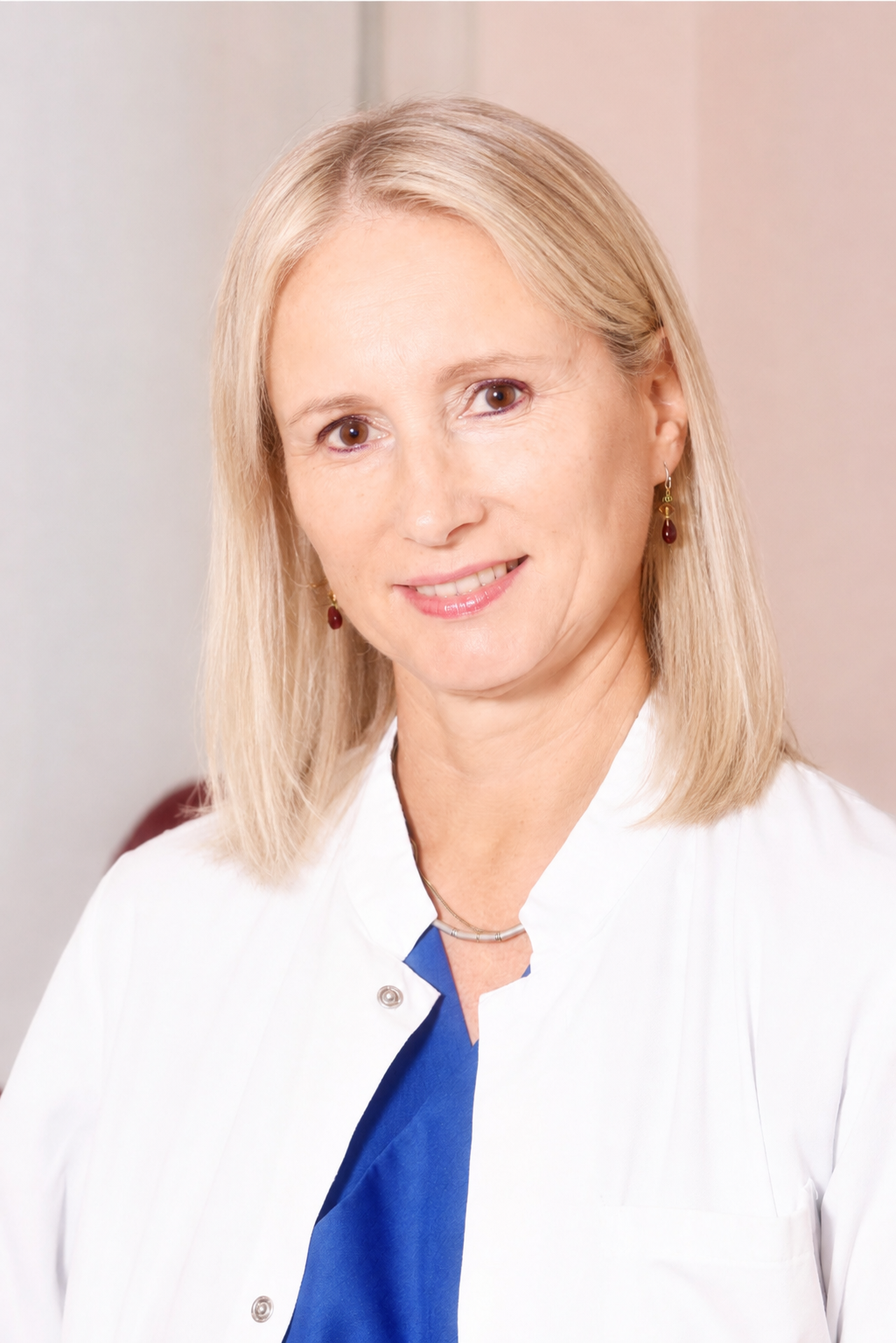
Personal preventive care by Dr. Wagner, gynaecologist FMH.
- Annual check-up with medical history, gynaecological examination and a personal discussion of findings – with an FMH specialist.
- Pap smear for the early detection of cervical cell changes, HPV test where clinically indicated.
- Basic insurance usually covers cervical cancer screening every three years when previous findings were normal.
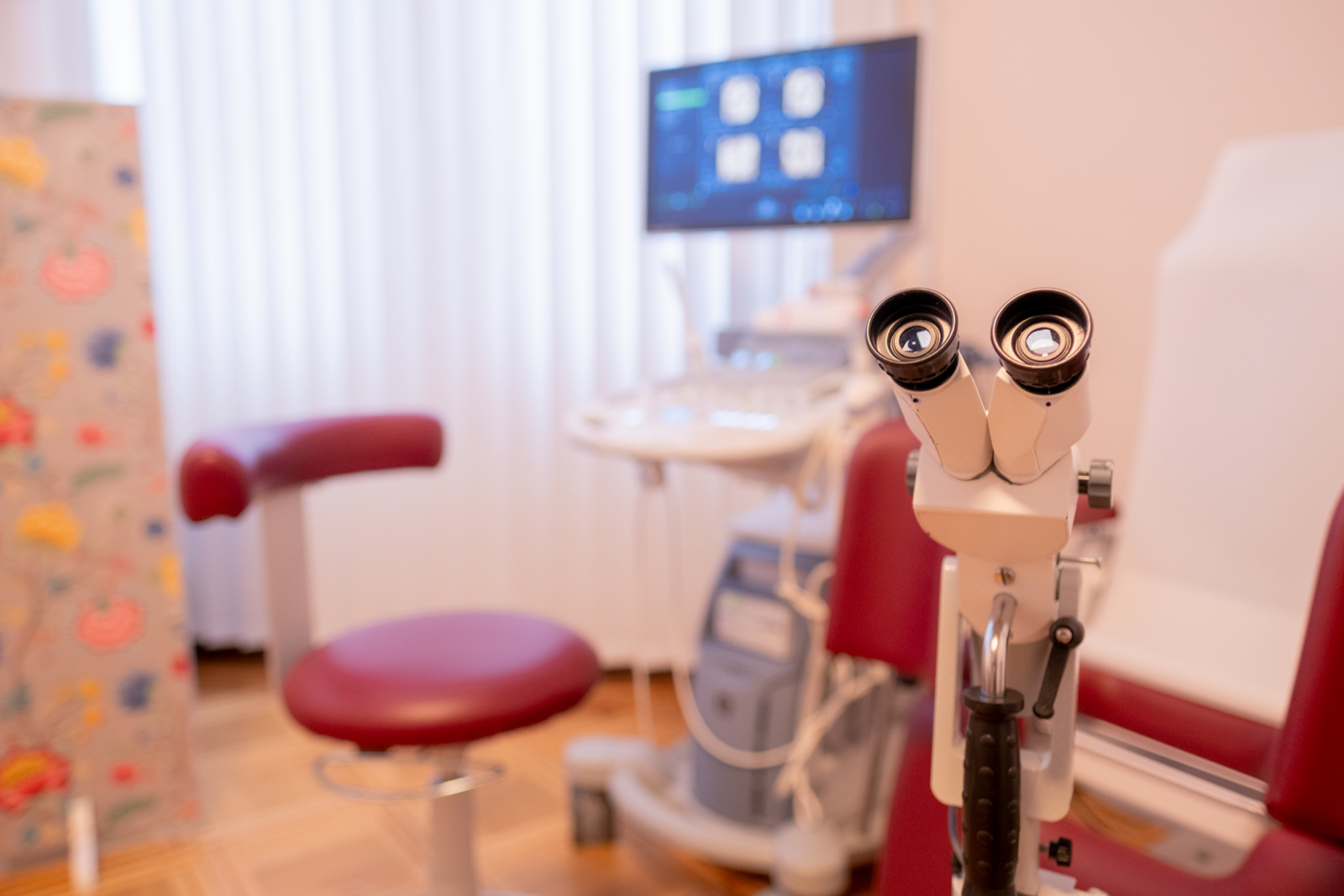
- For an abnormal finding: colposcopy and LEEP conisation in our own procedure room – no referral elsewhere.
- Optional premium check-up with ultrasound (uterus, ovaries, breast), flat rate CHF 681 – private service.
- Competence that provides reassurance. – Sound specialist expertise, modern diagnostics and many years of surgical experience.
- Clear solutions instead of detours. – Symptoms are carefully assessed and answered with a concrete, individual treatment plan.
- Medicine that remains personal. – Direct communication, transparent decisions and care in a modern, discreet practice.
more
- Additional diploma in cervical pathology. – Colposcopy and LEEP conisations take place in our own procedure room – we do not refer you elsewhere for an abnormal finding.
At a glance
The gynaecological check-up is a medical examination for the early detection of diseases of the female reproductive organs and breast. It typically includes a medical history, clinical examination, Pap smear for the early detection of cervical cancer as well as – where medically indicated – an HPV test, ultrasound and breast examination. In Switzerland, the examination is performed by an FMH specialist in gynaecology and obstetrics.
- FMH specialist in gynaecology and obstetrics
- Additional diploma in cervical pathology (Zusatzdiplom Zervixpathologie)
- Colposcopy and LEEP conisations in our own procedure room – we do not refer you elsewhere for an abnormal finding
- Over 3'700 verified reviews on Doctena (as of 08/2026)
- Practice in the heart of Basel
- Online appointment booking around the clock
Experience in numbers
20
Years operating – hospital and practice (since 2006)
10
Years own practice in Basel (since 2016)
FMH
Specialist in gynaecology & obstetrics
3'700+
Doctena reviews (08/2026)
Why Dr. Wagner
Expertise. Clarity. Personal medicine.
Three reasons why patients choose Dr. Wagner.
Competence that provides reassurance.
Sound specialist expertise, modern diagnostics and many years of surgical experience.
Clear solutions instead of detours.
Symptoms are carefully assessed and answered with a concrete, individual treatment plan.
Medicine that remains personal.
Direct communication, transparent decisions and care in a modern, discreet practice.
Additional diploma in cervical pathology.
Colposcopy and LEEP conisations take place in our own procedure room – we do not refer you elsewhere for an abnormal finding.
Concern
Prevention that thinks ahead.
Many women are unsure which examinations are sensible and which services are covered by health insurance.
With unremarkable prior findings, basic insurance generally covers cervical cancer early detection every three years. In the intervening years, many patients nevertheless wish for a regular check-up.
On request, we transparently explain which services are medically indicated and what costs, if any, may arise.
Treatment
What the check-up includes.
Depending on age, history and the question at hand, the following examinations can be performed.
- 01Medical history and recording of relevant symptoms
- 02Gynaecological examination
- 03Pap smear for the early detection of cell changes on the cervix
- 04HPV test where indicated
- 05Clinical breast examination
- 06Assessment of the cervix, vagina and external genitalia
- 07Medically indicated ultrasound examinations
- 08STI tests and blood tests depending on age, history and risk factors
- 09Counselling on abnormal findings and further work-up
- 10A chaperone available on request for intimate examinations – please let us know before your appointment
Who it's for
Who is the check-up suitable for?
- Annual gynaecological check-up
- Follow-up after an abnormal Pap smear or HPV test
- Follow-up after previous gynaecological conditions
- Breast symptoms or palpable findings
- Cycle changes or bleeding disorders
- Lower abdominal complaints
- Questions about gynaecological health
Context
Why cervical cancer is rare in Switzerland
By international comparison, Switzerland has a low rate of cervical cancer. Around 250 women are newly diagnosed here each year (Swiss Cancer League) – with a cancer that is among the most common in women worldwide.
That is neither coincidence nor luck. In about 5,000 women a year, a precancerous change is found and treated in Switzerland before cancer can develop from it. The low incidence is the result of this screening – it is the reason things can stop at a smear and need not end in surgery.
At the same time this means
the benefit lies not in the single appointment but in regularity. And in doing the right thing at the right time – not as much as possible. That is why we start at 21, keep to sensible intervals and avoid examinations that only produce additional findings without consequence.
Age
From what age a Pap smear makes sense
The Pap smear starts at age 21 – regardless of when a woman becomes sexually active.
Before that it is not useful
cervical cancer is extremely rare in this age group, while HPV infections are common and almost always clear up on their own.
A smear taken too early therefore mainly shows changes without clinical relevance – triggering follow-ups, procedures and anxiety that benefit no one.
The annual check-up itself is worthwhile before 21 too
cycle, contraception, symptoms, HPV vaccination – simply without a smear.
Without a speculum
When a speculum examination is not an option
In women who have never been sexually active, we do not perform a Pap smear. The reason is not primarily the examination itself, but what lies behind it: cervical cancer arises almost exclusively after infection with HP viruses, and these are sexually transmitted. Without that route of transmission, the precondition for the disease is absent – screening for cervical cancer offers no benefit in this situation.
The annual check-up still takes place
conversation, cycle, symptoms, contraception, HPV vaccination, ultrasound through the abdominal wall. If a work-up becomes necessary – for discharge, burning or suspected infection – a fine vaginal swab is usually sufficient, and you can take it yourself if you prefer. We only perform a speculum examination when it is genuinely medically necessary, and then in the gentlest possible form.
The same applies to women for whom a vaginal examination is difficult for other reasons – for example severe pain, tensing or after the menopause. We then find the approach that is manageable for you, together.
HPV
The HPV test from age 30
From age 30, the HPV test is recommended as a test for the causative virus. In Switzerland it is currently not covered by basic insurance as a stand-alone screening test and is billed privately.
It is covered when used to work up an abnormal smear or as a follow-up after treatment. We tell you beforehand what applies in your situation.
Vaccination
HPV vaccination: the prevention that comes before screening
Almost all cases of cervical cancer are caused by infection with HP viruses. The vaccination acts where the disease begins – long before a smear could show anything. It also protects against precancerous changes in the anogenital area, against certain oropharyngeal cancers and against genital warts.
Vaccination is recommended for all adolescents aged 11 to 14 – at this age two doses six months apart are sufficient. Between 15 and 26 it is caught up on, then as a rule with three doses. Up to the 27th birthday the cantonal vaccination programmes cover the cost of the vaccination; it is exempt from the deductible, while the statutory 10 % co-payment still applies.
For boys and young men the recommendation has existed since 2015; in 2024 it was upgraded to a basic vaccination and applies up to the 27th birthday – to protect them against genital warts and against anal and oropharyngeal cancers, and because the viruses can only be contained effectively when both sexes are vaccinated.
And if I am older than 26?
The vaccine is licensed up to age 45; you then bear the cost yourself. Whether it is worthwhile for you depends on your situation – not every woman benefits equally.
It can make sense if your life situation changes, or if the risk of recurrence after treatment on the cervix can be reduced – after conisation, studies show a reduction in the risk of recurrent precancerous changes of up to 60 per cent, mainly based on observational data and meta-analyses. Earlier contact with HP viruses does not argue against vaccination: it still protects against the types you have not yet encountered and against re-infection – but it does not treat an existing infection.
We go through this calmly at the annual check-up and tell you honestly if we consider the benefit small.
Still worthwhile after contact with the virus
A common misunderstanding
“I have already had HPV, so vaccination is pointless now.” That is not the case. The vaccine covers several high-risk types, and hardly anyone has encountered all of them. Against the types you have not met, protection is unchanged.
It also remains effective after a past infection
a cleared HPV infection leaves no reliable immunity, and re-infection with the same type is possible – which is exactly where vaccination helps. It does not treat an existing infection, but it prevents new infections and reactivation.
Two things that are often misunderstood
An HPV test is not needed before vaccination. It does not change the decision and would only create costs and uncertainty.
And
vaccination does not replace screening. It covers the most important, but not all, cancer-causing virus types. Vaccinated women also still need regular smears from age 21.
If there is no HPV vaccination
The interval is determined individually and explained during the consultation.
Co-testing
Why we do not do both at the same time
Routinely combining a smear and an HPV test (co-testing) is no longer recommended. Compared with either method alone it offers no relevant additional benefit, costs more and more often produces findings that only lead to further investigations.
Together with you we choose the method that fits your age and history.
Related
Costs
Premium check-up with ultrasound – the extended annual check-up
If you would like more time and an extended imaging assessment for your annual check-up, you can book it as the premium check-up with ultrasound – a flat CHF 681, open to every patient, with or without supplementary insurance. In addition to the clinical check-up it includes:
- Gynaecological ultrasound (uterus and ovaries)
- Breast ultrasound (mammary sonography)
- Individual recommendations on early detection and lifestyle
Note: a private medical service at a flat CHF 681, not billed through basic insurance. Some supplementary policies and international private insurers (Cigna, Allianz Care, AXA, Bupa Global, Swisscare) contribute to it. Every patient of course receives the regular check-up and all medically indicated examinations under KVG. Full details on the page «Premium check-up with ultrasound».
Where we draw the line: basic insurance covers cervical cancer early detection on a three-year rhythm. The premium check-up with ultrasound is intended for the years in between and is billed privately – it is not an annual add-on to the insurance-covered check-up. The difference lies in the depth of the examination, not in its frequency – smears are done more closely only if your history calls for it.
What we deliberately don't doRegional screening programme
Mammography screening programme of both Basel cantons
All women aged 50 to 74 living in Basel-Stadt or Basel-Landschaft can take part in the regional mammography screening programme. Invitations are sent every two years, participation is voluntary and exempt from the insurance deductible (franchise). The programme is run by Krebsliga beider Basel.
Basel-Stadt has run the programme since 2014; Basel-Landschaft started in early 2026. By mid-June 2026, 1,625 women had taken part there; further work-up was recommended in fewer than five percent of cases, and in roughly nine out of ten of those, breast cancer was ruled out.
The gynaecological check-up in the practice does not replace this screening: it covers the cervix, uterus, ovaries and the clinical breast examination – mammography in the screening programme complements it.
- 50–74
- years – invitation every two years
- No franchise
- voluntary, deductible-exempt
- 9 in 10
- work-ups with no cancer found
One appointment. One main concern. So we can give you our full, unhurried attention, we address one main topic per appointment. We're happy to schedule additional or complex questions in a separate appointment. This is what allows consultations to run on time and without long waiting times – thank you for your understanding.
Frequently asked questions
What patients often ask.
Medically reviewed by Dr. med. Anna Margareta Wagner
Board-certified specialist (FMH) in Gynaecology and Obstetrics, specialising in intimate surgery, ultrasound diagnostics and individual women's health.
Last medically reviewed:
Sources & associations
- Swiss Cancer League – Cervical Cancer Prevention
- SGGG – Swiss Society of Gynaecology and Obstetrics
- FOPH – Federal Office of Public Health, HPV Vaccination (basic vaccination, Swiss vaccination schedule)
- Swiss Cancer League – figures on new cases and precancerous changes
- Kechagias et al., BMJ 2022 – HPV vaccination after treatment of cervical lesions (meta-analysis)
Leave a short note – we will call you back.
Two minutes, four questions. For prescriptions, reports or administrative matters there is a separate form – no appointment needed.
Send your details – I will get back to you.
Vertraulich. A detailed personal consultation always takes place before any treatment.
Book your appointment online.
Online via Doctena or by phone at +41 61 666 62 10.
Emergency: For acute, severe symptoms outside office hours, call the medical emergency line 144 or go to the emergency department of the University Hospital Basel.
Medical notice: The content of this page is for general information only and does not replace personal medical advice, diagnosis or treatment. Measures are discussed individually during the consultation and are based on medical history, examination and current guidelines.
Privacy: Doctena's privacy policy applies to online bookings made via Doctena. Practice-internal data is processed in accordance with the Swiss Data Protection Act (DSG).