Gynaecological ultrasound Basel – procedure, cost, booking
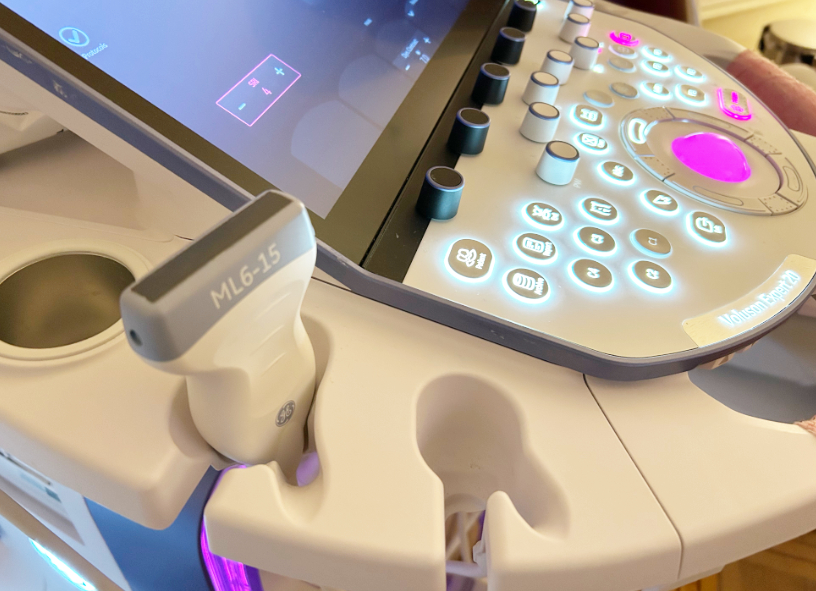
An ultrasound appointment at my practice at Spalenvorstadt 3 in Basel: examination and discussion of the findings in the same appointment, billed through basic insurance where medically indicated. Bookable online – transvaginal or abdominal, depending on the question. For the background and what a scan can and cannot show, see the guide «Gynaecological ultrasound».
- Who it is for
- Lower abdominal pain, abnormal findings, bleeding disorders, suspected fibroids, cysts or endometriosis
- Appointment
- Consultation, ultrasound and findings in the same appointment
- Costs
- Basic insurance where medically indicated
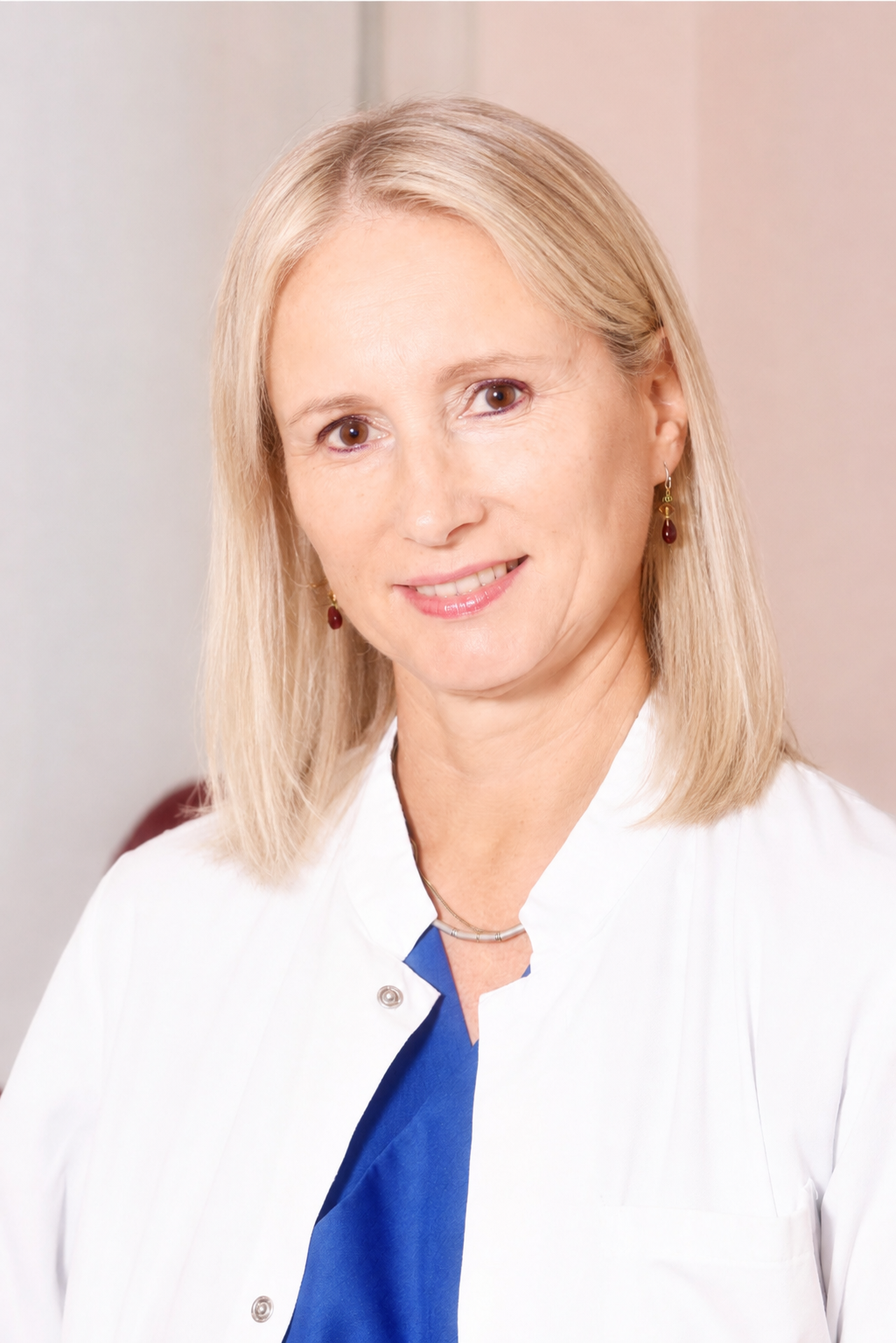
20 years of ultrasound experience, SGUM certificate.
I do not scan routinely, but whenever there is something to assess. The transvaginal scan is the standard because it gives markedly better images of the uterus and ovaries; the abdominal scan is used for very large findings, for young girls and for women who have never been sexually active. The examination takes place in the same appointment in which we discuss your symptoms, and we go through the result immediately afterwards.
At a glance
A gynaecological ultrasound assesses the uterus, the endometrium, the ovaries and the surrounding space in the pelvis. It is performed transvaginally with a slim probe or abdominally through the abdominal wall – depending on the question and on your situation.
- SGUM qualification including the certificate of proficiency in obstetric ultrasound
- Twenty years of ultrasound experience
- Result discussed in conversation, in the same appointment
- Indication-led – no routine scanning without a question
Experience in numbers
20
years of ultrasound experience
SGUM
qualification incl. obstetric ultrasound
1
appointment – scan and discussion
2
languages: DE · EN
Concern
When an ultrasound makes sense
Lower abdominal pain, acute or recurrent, cycle-dependent or independent. Heavy bleeding, when looking for fibroids, polyps or adenomyosis. Irregular or absent bleeding, depending on your history. Intermenstrual bleeding or any bleeding after the menopause – here always.
A palpable finding or pressure in the lower abdomen.
Follow-up of a known finding
cyst, fibroid, endometriotic lesion. Checking the position of an IUD after insertion or when you have symptoms. Fertility – assessment of uterus and ovaries. Suspected PMOS (formerly PCOS), alongside history and targeted laboratory tests.
In all of these situations this is a medically indicated assessment and is billed through basic insurance.
Treatment
What can be assessed
Uterus, endometrium, ovaries and the surrounding space in the pelvis.
- 01Fibroids – number, size and above all location; the location decides whether a fibroid explains the bleeding and whether it needs treatment
- 02Polyps in the uterine cavity
- 03Adenomyosis – endometrial tissue grown into the muscle layer. In my practice a frequent cause of heavy and painful bleeding, and often recognisable on a targeted scan if you know what to look for
- 04Endometriosis – deep infiltrating lesions and ovarian endometriomas are visible, superficial lesions are not
- 05Ovarian cysts – most are functional and resolve on their own; what matters is the interpretation, not the mere finding
- 06Endometrium – thickness and structure, especially with bleeding disorders and after the menopause
- 07Position of an IUD
Who it's for
What an ultrasound does not do
- It is not ovarian cancer screening. In women without symptoms, routine scanning does not reduce mortality from ovarian cancer according to current evidence – but it regularly produces incidental findings that lead to further investigations.
- It does not replace the Pap smear. The cervix is assessed by cytology.
- It does not rule out endometriosis. A normal scan only rules out certain forms.
- A normal result is therefore not an all-clear for everything, but the answer to one particular question. What it means in your case we discuss in the appointment.
Why with me
The difference lies less in the machine than in the question
I have been performing ultrasound examinations for twenty years and hold the SGUM qualification including the certificate of proficiency in obstetric ultrasound.
Seeing a fibroid is easy. Judging whether this fibroid explains the bleeding, whether adenomyosis is behind it and what follows from that is the actual work. Because I also operate, I assess every finding from the outset with a view to what consequence it would have.
Related
Process
How I carry out the examination
Transvaginal or abdominal, depending on the question – always with the result explained straight away.
A regular appointment is designed for one concern. The ultrasound is part of that appointment, not a separate add-on appointment. If you would like to discuss several topics, please book an appointment for each. Bring previous reports and earlier ultrasound images if a finding is to be followed up – comparison over time is often more informative than a single image.
- Step 01
Transvaginal ultrasound
A slim probe is inserted into the vagina. It gives markedly better images of the uterus and ovaries and is therefore the standard. The examination takes a few minutes and is usually not painful. It can be uncomfortable – please say so and I will adapt. Your bladder does not need to be full.
- Step 02
Transabdominal ultrasound
Through the abdominal wall, for very large findings, for young girls and for women who have never been sexually active. In them no transvaginal scan is performed. Important: the transabdominal scan only works with a full bladder – please come with a full bladder (drink about one litre of water an hour before the appointment and do not empty your bladder).
- Step 03
Preparation
None in particular for the transvaginal scan. If a scan through the abdominal wall is planned, please come with a full bladder. An ultrasound is also possible during your period. To assess the endometrium an appointment shortly after bleeding is more favourable; if that matters for your question, we plan the appointment accordingly.
- Step 04
Result
You get the result in conversation, in the same appointment – not as a report sent to you later.
Frequently asked questions
What patients often ask.
Medically reviewed by Dr. med. Anna Margareta Wagner
Board-certified specialist (FMH) in Gynaecology and Obstetrics, specialising in intimate surgery, ultrasound diagnostics and individual women's health.
Last medically reviewed:
Sources & associations
Leave a short note – we will call you back.
Two minutes, four questions. For prescriptions, reports or administrative matters there is a separate form – no appointment needed.
Send your details – I will get back to you.
Vertraulich. A detailed personal consultation always takes place before any treatment.
Book your appointment online.
Online via Doctena or by phone at +41 61 666 62 10.
Emergency: For acute, severe symptoms outside office hours, call the medical emergency line 144 or go to the emergency department of the University Hospital Basel.
Medical notice: The content of this page is for general information only and does not replace personal medical advice, diagnosis or treatment. Measures are discussed individually during the consultation and are based on medical history, examination and current guidelines.
Privacy: Doctena's privacy policy applies to online bookings made via Doctena. Practice-internal data is processed in accordance with the Swiss Data Protection Act (DSG).